



Israel Police have arrested five people in a crypto money laundering investigation centered on a WhatsApp group that allegedly arranged about NIS 16 million in cryptocurrency trades without a license.
Investigators from Lahav 433’s National Unit for Combating Economic Crime carried out the arrests on Tuesday, Nov. 10, and searched the suspects’ homes.
Police say the money did not simply change hands. They suspect proceeds were pushed into ordinary bank accounts and dressed up as loans, backed by written loan agreements.
For anyone following Israel’s crypto market, the case lands at a telling moment. A major bank is days away from offering regulated Bitcoin trading, while a state audit has already shown how little crypto activity reaches the tax system.
The bigger question is whether licensed, tax-ready channels can finally pull this kind of activity out of chat groups and into the open.
What Police Allege Happened
According to Israel Police, the five suspects held different roles in a WhatsApp group used to arrange crypto exchange deals.
Individual transactions allegedly ran to hundreds of thousands of shekels, with the total activity under review estimated at around NIS 16 million.
Police said the trades were carried out with sophisticated methods, without the required permits and without being reported to Israel’s tax authorities.
During Tuesday’s searches, officers seized wallets, computers suspected of being used in the alleged offenses and tens of thousands of shekels in cash.

The suspects were questioned on suspicion of offenses under the Prohibition on Money Laundering Law, providing financial asset services without a permit and obtaining something by fraud.
No charges have been announced. Police said they expect the investigation to widen, with more people likely to be questioned.
Why the Loan Agreements Matter
The alleged loan mechanism is what turns this from a licensing case into a crypto money laundering case.
Moving crypto proceeds into a bank account normally raises questions about where the money came from. Labeling the transfers as loans, with paperwork to match, would give them the look of routine private lending.
Investigators say that is exactly what the agreements were meant to do: conceal the real nature of the transfers.
We think this detail deserves attention. The weak point in the alleged scheme was not the blockchain but the off-chain paperwork wrapped around it.
Bitcoin transactions leave a permanent public record. Informal desks that bypass licensing and reporting tend to rely on cash, chats and documents that are far harder to trace than the ledger itself.
Israel’s Crypto Tax Reporting Gap in Numbers
The case also revives a problem Israel’s own auditors flagged two years ago.
In its November 2024 annual audit report, the State Comptroller found that an average of only 500 people a year reported crypto activity to the Tax Authority between 2018 and 2022.
That compares with a minimum reporting potential estimated at 200,000 people, a reporting rate of roughly 0.25%.
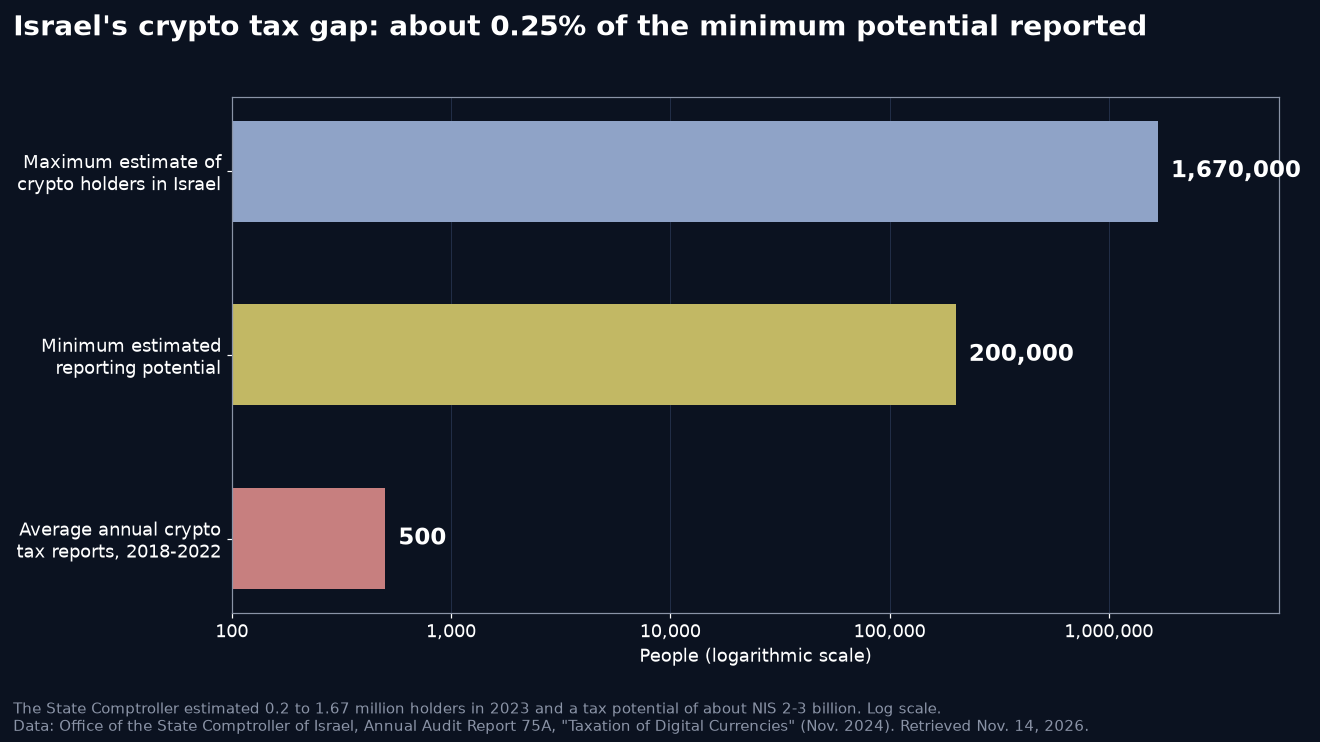
The audit cited estimates of 0.2 million to 1.67 million crypto holders in Israel in 2023, and put the potential tax take from crypto income at about NIS 2 billion to NIS 3 billion.
It also found structural gaps. The Tax Authority had issued eight publications with crypto tax rules between 2017 and 2023, but none had been written into legislation.
Over 2019 to 2023, the number of assessors and coordinators at the authority fell 31.5%, from 833 to 570, according to the report.
A procedure for paying crypto-related tax through the Bank of Israel, in place since Dec. 31, 2023, had drawn zero applications by the end of the audit, the report found.
Regulated Bitcoin Access Is Arriving
The constructive side of this story is that legitimate channels are opening quickly.
As we reported, Israel Discount Bank plans to offer Bitcoin trading in its app from Nov. 26, giving customers a regulated route that sits inside the banking and tax system.
The State Comptroller’s report itself urged the Tax Authority to work with the Bank of Israel and the anti-money laundering authority so that tax rules do not become another barrier to reporting crypto income.
We believe that is the right lesson. When buying Bitcoin through a bank is as simple as buying a stock, the appeal of an unlicensed WhatsApp desk shrinks sharply.
What Comes Next for Crypto Fraud Enforcement?
The five suspects have not been charged, and the allegations remain under investigation.
What the case shows is that Israeli enforcement is now targeting the informal plumbing around crypto, especially where money moves from wallets back into banks.
For Bitcoin holders, that is not a threat. Clear licensing and reporting rules protect the people who already use regulated platforms, and they make it harder for bad actors to hide behind the asset.
Bitcoin traded near $67,300 early on Nov. 14, according to Coinbase data.
As regulated access grows, we expect more Israeli investors to choose the open, documented route. The coming weeks, starting with Discount Bank’s launch, will show how quickly that shift happens.
DC Forecasts is a leader in many crypto news categories, striving for the highest journalistic standards and abiding by a strict set of editorial policies. If you are interested to offer your expertise or contribute to our news website, feel free to contact us at [email protected]












Discussion about this post