



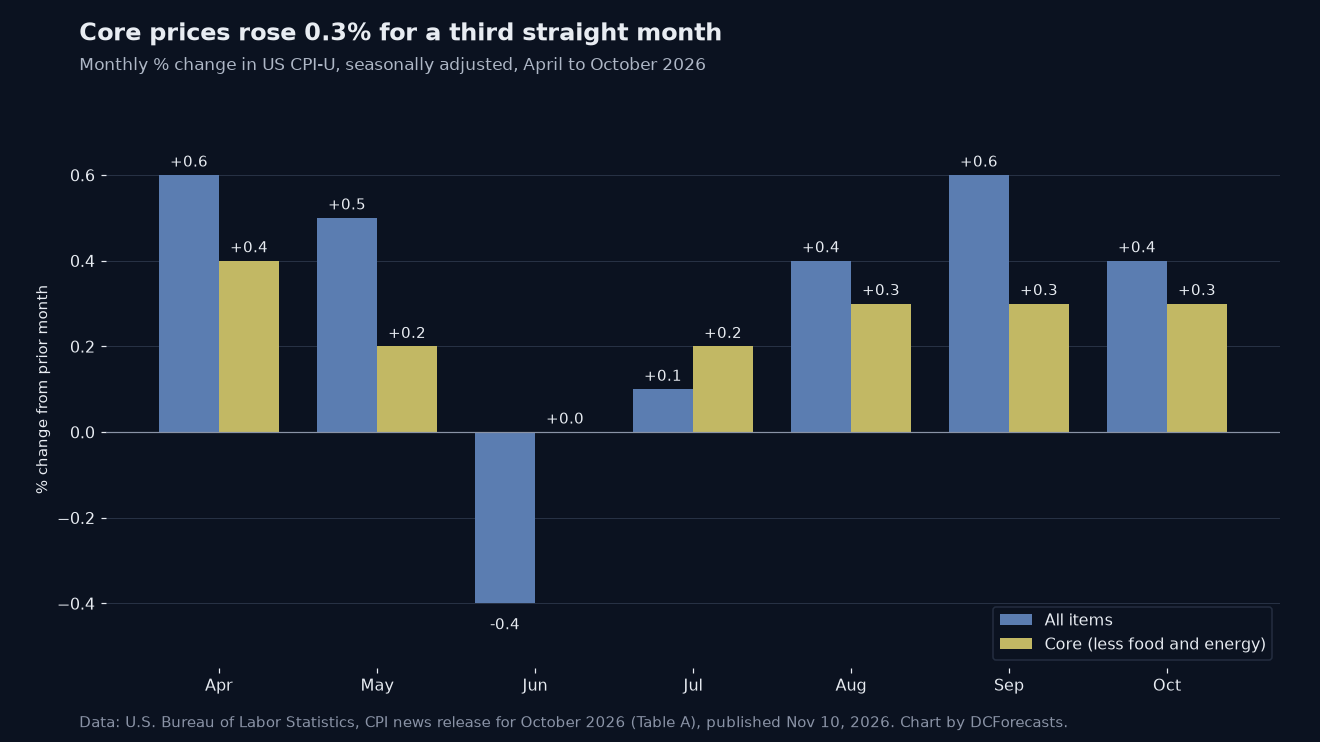
US consumer prices rose 0.4% in October, and core CPI climbed 0.3% for the third month in a row, the Bureau of Labor Statistics said on Tuesday.
The report carried an unusual gap. The government did not publish a 12-month inflation rate for either the headline index or the core measure.
The reason dates back a year. October 2025 prices were never collected during the 2025 lapse in federal appropriations, so there is no base month to compare against.
The monthly numbers
The all-items index rose 0.4% on a seasonally adjusted basis, after a 0.6% jump in September. Before seasonal adjustment, the index edged up 0.2% to 337.511.
Core CPI, which strips out food and energy, rose 0.3%. It posted the same reading in August and September, which makes October the third straight month at that pace.
That steadiness is the main story for markets. A 0.3% monthly core gain is firmer than the 0.0% to 0.2% readings seen in June and July, but it is not accelerating either.
Shelter and food did the heavy lifting
Shelter rose 0.3% and accounted for more than 30% of the monthly increase across all items, the BLS said. Owners’ equivalent rent rose 0.3%, rent gained 0.2% and hotel and lodging prices rose 0.6%.
Food prices climbed 0.5%, so the two categories households find hardest to cut back on both moved higher. Grocery prices rose 0.4% and meals away from home were up 0.5%.
Other gains came from recreation, up 0.8%, motor vehicle insurance, up 0.7%, and medical care, up 0.3%. Hospital services rose 0.8% within that group.

There were soft spots too. Used car and truck prices fell 1.2% for the month and are 3.3% lower than a year ago. Communication prices slipped 0.1%, and new vehicles rose only 0.2%.
Energy cooled after a huge September
Energy prices rose 0.7% in October, a sharp slowdown from the 5.2% surge a month earlier. Gasoline was up 1.0% on a seasonally adjusted basis after a 9.1% jump in September.
Before seasonal adjustment, gasoline prices actually fell 0.7% in October. Over 12 months, however, the gasoline index is up 37.4%, so the pump remains the biggest pressure point for households.
Electricity rose 0.9%, while natural gas fell 0.8%. Our preview of this report flagged energy as the wild card, and October’s slowdown is a welcome change from September’s spike.
Why the missing annual rate matters
Most headlines, policy speeches and wage talks lean on one number: inflation over the past 12 months. This month, the BLS simply cannot produce it for all items or core.
Based on the published index levels, headline CPI was running about 3.7% higher than a year earlier in September, with core near 2.6%. October’s monthly gains suggest the picture did not change much, but there is no official figure to confirm it.
That leaves investors and policymakers reading the trend from monthly changes. Three straight 0.3% core prints work out to roughly 3.6% if they were repeated for a full year, which is higher than the September annual pace.
Analysts can still compare October with September, or work out three- and six-month trends from the index levels. Those are useful estimates, but they are not official annual figures from the BLS.
The next CPI report, covering November, is scheduled for December 10, 2026.
How Bitcoin reacted
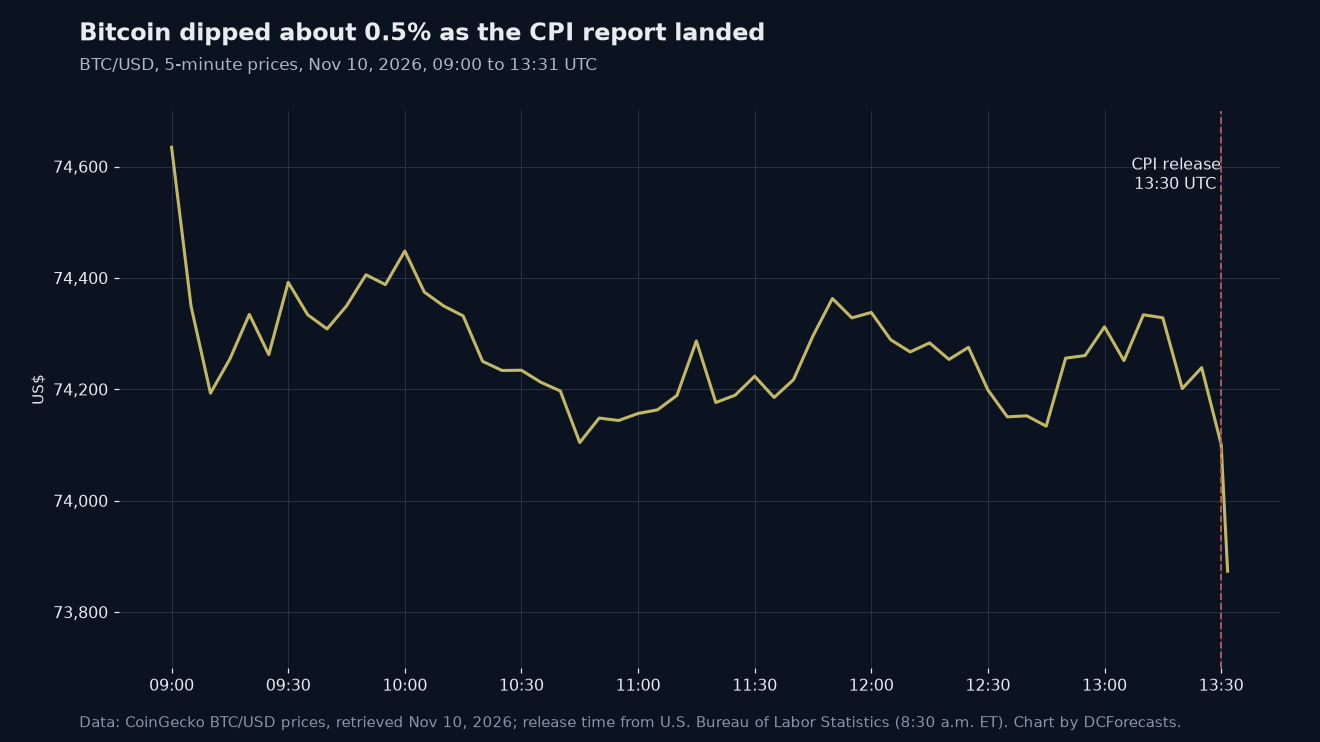
Bitcoin dipped as the numbers hit at 8:30 a.m. Eastern. CoinGecko data shows BTC near $74,240 at 13:25 UTC and around $73,870 a minute after the release, a move of roughly 0.5%.
The move came after a quiet morning. From about 09:10 UTC until the release, BTC traded mostly between $74,100 and $74,450, so the dip pushed it just below that range rather than breaking any major level.
Shortly after, Bitcoin traded near $73,840, about 1.1% lower over 24 hours. That is a modest response to a report that had no single shock number and no annual rate to anchor it.
Bond markets have been the bigger driver of risk appetite lately. Real yields, covered in our look at the 10-year Treasury yield, still shape how traders price Bitcoin around macro data.
A steady core reading does not add pressure on that front, and a calmer energy print takes away one of the risks that hung over the report.
A month without the headline number
There is a quieter lesson here for Bitcoin holders. A year-old funding lapse left a hole in one of the most watched government statistics, and nothing can go back and collect those prices now.
Bitcoin’s supply works differently. Its issuance schedule is fixed in code, and anyone running a node can check the total supply at any moment without waiting for an agency or a release date.
We think that contrast is a big part of why long-term buyers keep treating Bitcoin as a savings asset. Prices of groceries, rent and gasoline still rose in October, and the purchasing power of cash kept eroding, annual figure or not.
For traders, the near-term question is simpler. Core CPI held at 0.3%, energy cooled and Bitcoin’s dip was shallow. The full release is available on the Bureau of Labor Statistics website.
DC Forecasts is a leader in many crypto news categories, striving for the highest journalistic standards and abiding by a strict set of editorial policies. If you are interested to offer your expertise or contribute to our news website, feel free to contact us at [email protected]












Discussion about this post