



Bitcoin selling pressure has eased significantly compared with the market’s previous major decline, even as BTC continues to trade below important resistance levels. New on-chain data shows that investors are realizing losses at less than one-third of the pace recorded during the May-to-July correction.
Bitcoin holders realized approximately 172,700 BTC in net losses over 12 consecutive days through November 10. That represents an average of roughly 14,400 BTC per day, compared with approximately 45,000 BTC per day during the earlier downturn.
The difference is substantial. Selling pressure measured by realized losses has declined by approximately 68%, suggesting that the current correction has not yet reached the intensity of the summer sell-off.
This development comes as investors continue monitoring Bitcoin’s 200-day moving average and searching for evidence that buyers are returning.
Bitcoin Selling Pressure Is Losing Momentum
One of the most important developments in the latest market data is the difference between the current correction and the previous major decline.
During the May-to-July downturn, Bitcoin investors realized losses at an average rate of approximately 45,000 BTC daily.
The latest 12-day period shows a considerably lower average of 14,400 BTC.
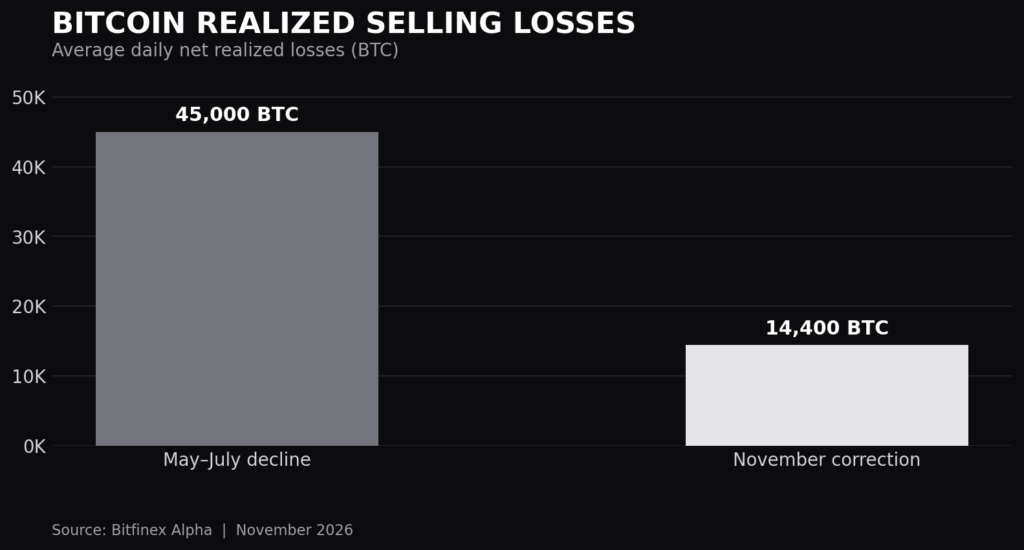
The decline in realized selling losses does not automatically mean Bitcoin has reached its bottom. However, it suggests that investors are not capitulating at the same pace as they did earlier in the year.

Another important indicator is the short-term holder Spent Output Profit Ratio (SOPR).
On November 10, this metric fell to 0.989, indicating that recently acquired coins were being sold at an average loss of approximately 1%.
This suggests that some investors are accepting modest losses rather than waiting for a stronger recovery.
Buyers Add 233,000 BTC Between $70,000 and $75,000
While some investors are selling, others appear to be accumulating Bitcoin at lower prices.
The latest research shows that the amount of BTC with an estimated acquisition cost between $70,000 and $75,000 increased by approximately 233,000 BTC between November 8 and November 11.
That brought the total supply concentrated in this price range to approximately 762,000 BTC.
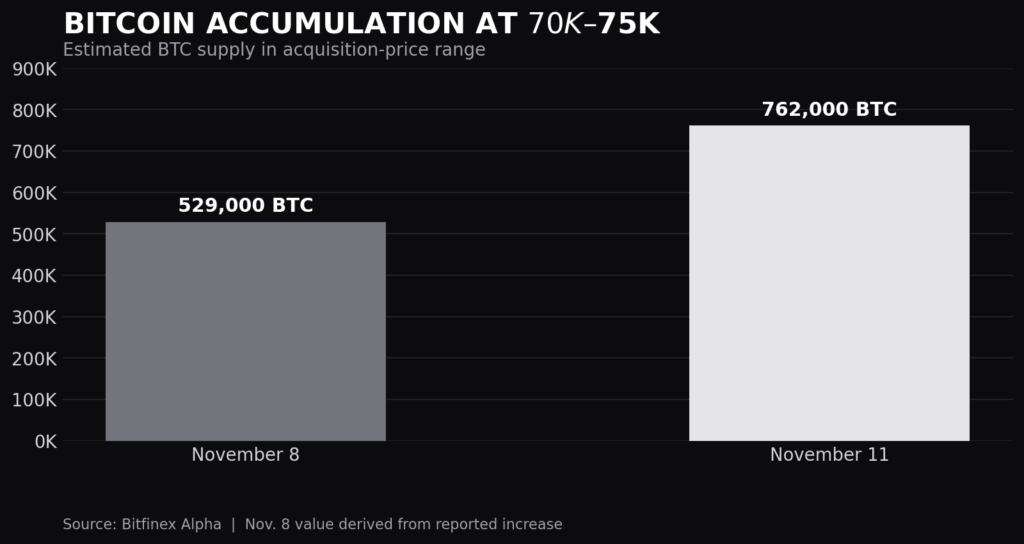
This concentration matters because investors who recently purchased Bitcoin in this range may be more willing to defend their positions if prices revisit those levels.
However, cost-basis concentration should not be confused with confirmed buying orders or guaranteed technical support.
There is also resistance above the market.
Approximately 1.6 million BTC has an estimated acquisition cost between $75,000 and $80,000, creating a potential source of selling pressure as investors approach their breakeven prices.
As we previously discussed in our Bitcoin market outlook, institutional demand could play an important role in determining whether the next recovery becomes sustainable.
ETF Outflows Are Showing Signs of Improvement
Institutional investors remain another important part of the Bitcoin market.
US spot Bitcoin ETFs recorded approximately $201 million in net outflows on November 9, followed by around $95 million on November 10.
That represents a decline of nearly 53% in the daily withdrawal amount.
Although the figures remain negative, the slower pace suggests that institutional selling pressure may be easing.
We have already examined how Bitcoin ETF inflows can influence market confidence during periods of uncertainty.
A sustained return to positive ETF flows, combined with stronger spot-market demand, would provide more convincing evidence that Bitcoin is preparing for another recovery.
Can Bitcoin Buyers Turn Accumulation Into a Recovery?
For now, Bitcoin faces two important price regions.
The $70,000–$75,000 area has attracted significant accumulation, making it a potential support zone. Meanwhile, the $75,000–$80,000 region contains substantial supply from investors who may sell as prices recover.
The next important test will be whether buyers can absorb that overhead supply while ETF outflows continue to slow.
We believe the most encouraging signal is the combination of lower realized losses and continued accumulation.
The market has not yet confirmed a sustained reversal, and renewed macroeconomic pressure could still weaken demand. Nevertheless, the latest figures show that the current correction is unfolding differently from the more aggressive summer decline.
If accumulation continues and institutional demand improves, Bitcoin could build a stronger foundation for its next upward move.
DC Forecasts is a leader in many crypto news categories, striving for the highest journalistic standards and abiding by a strict set of editorial policies. If you are interested to offer your expertise or contribute to our news website, feel free to contact us at [email protected]












Discussion about this post