



Ethereum ETF outflows have now passed $2.5 billion since the start of October, and almost all of that money has left through a single door: BlackRock’s iShares Ethereum Trust (ETHA).
The 11 U.S. spot Ether funds recorded net outflows of $2.58 billion between Oct. 1 and Nov. 19, according to Farside Investors data. ETHA accounted for $2.25 billion of it, or 87%.
The selling arrived on 31 of the 36 trading sessions in that stretch, including another $131.2 million on Nov. 19.
Ether itself closed Nov. 19 at $1,755.38 on Coinbase’s U.S. exchange, its lowest daily close since July 9.
The bigger question is whether this is a lasting retreat from Ether exposure, or a heavy but temporary unwind by one fund’s holders.
How Big Are the Ethereum ETF Outflows?
October was the worst month the funds have recorded since they launched in July 2024. Net outflows reached $1.61 billion, ahead of the $1.42 billion that left in November 2025.
November is already at $972.6 million through Nov. 19. Twelve of its 14 sessions so far ended with money leaving.
The longer view puts that in context.
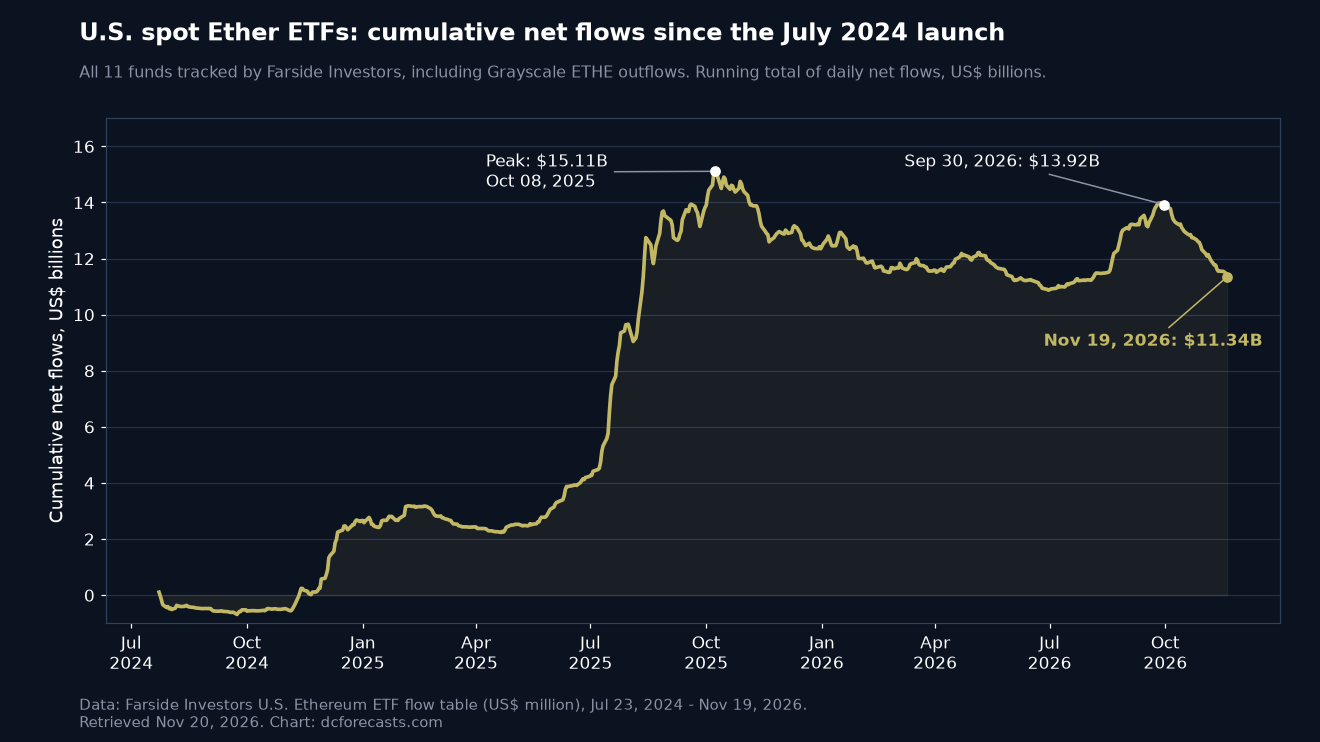
Cumulative net inflows peaked at $15.11 billion on Oct. 8, 2025. They stood at $13.92 billion on Sept. 30 this year and have since dropped to $11.34 billion.

So the funds have given back roughly a sixth of their lifetime net inflows in seven weeks. They still retain about 75% of the peak figure, which is a sizeable base of committed capital.
Why Is One Fund Doing Most of the Selling?
ETHA is the biggest Ether fund by lifetime inflows, at $11.04 billion, so it naturally has the most holders who can redeem.
Even so, its share of the recent exits stands out. In November alone, ETHA lost $826.2 million, about 85% of the group total. On Nov. 19 it shed $124.2 million while the other ten funds lost just $7.0 million between them.
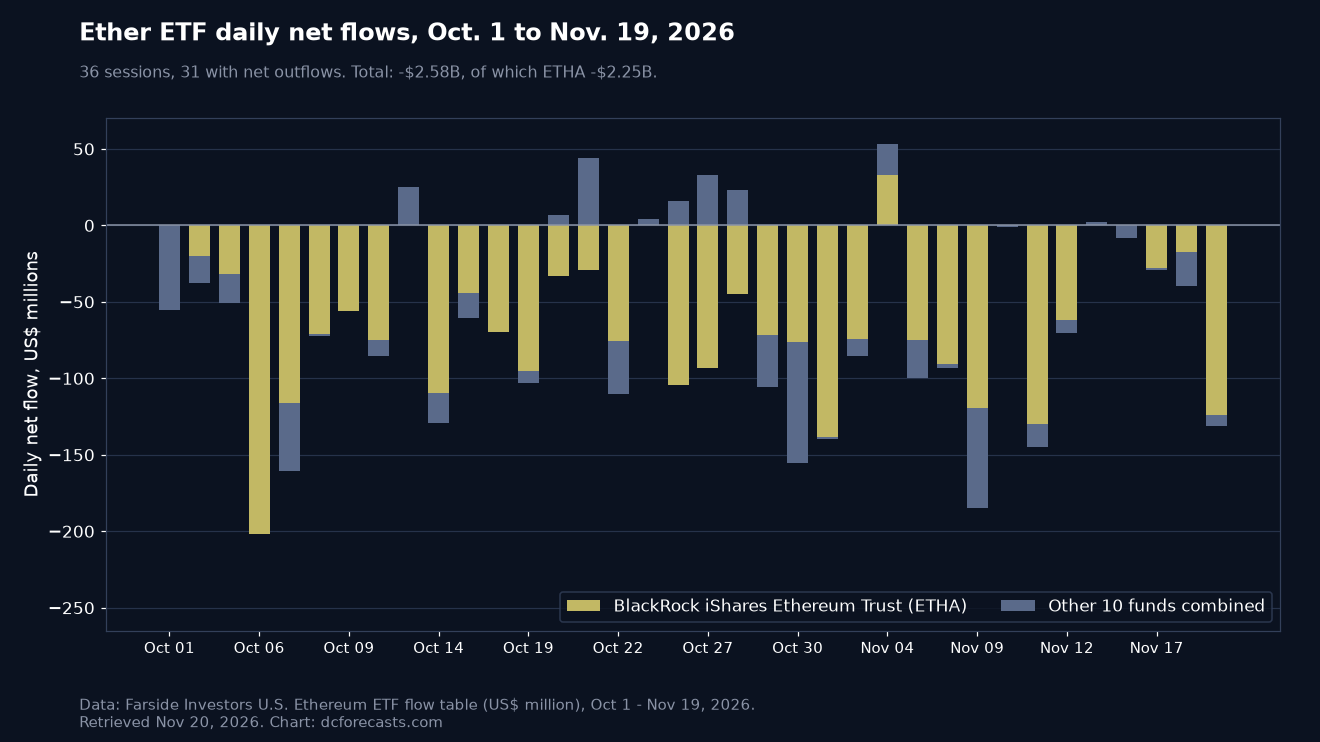
The chart shows how persistent the pattern has been. ETHA reported outflows or zero flows on every session except one, while most of the other funds spent many sessions near zero, with only small moves either way.
Grayscale’s older Ethereum Trust (ETHE), which bled heavily in the first year, has been close to flat this month, with just $2.4 million of net outflows in November.
ETF flow tables do not reveal who is selling. We read the concentration as large allocators trimming the most liquid vehicle, rather than a broad rush for the exits, but that is our interpretation and not something BlackRock has stated.
What the Ether Price Is Telling Us
The fund flows have tracked a steep price slide. Ether is down 34.6% from its Sept. 30 close of $2,683.93, and 22.1% in November alone.
It has not broken its 2026 floor, however. The lowest daily close this year was $1,565.19 on June 25, which leaves the Nov. 19 close about 12% above that level.
Ether has also lagged Bitcoin. Over the same period BTC fell 25.9%, to $61,913, and the ETH/BTC ratio slipped 11.6% to 0.02838.
That is not unusual in a risk-off phase. Investors tend to hold the largest, most established asset longest, and Bitcoin’s own ETF complex is working through its record one-day outflow at IBIT from a much larger base.
The same preference showed up at the corporate level this week, when CoinShares sold all of its Ether and half its Solana but kept its Bitcoin to fund a buyback.
Has This Happened Before?
It has, and the record is encouraging for the product’s staying power.
After the $1.42 billion November 2025 exit, flows stayed negative for most of the next six months. Then they turned. August 2026 brought $1.85 billion of net inflows and September added another $831.3 million.
In other words, the $2.68 billion that arrived in August and September more than offset the $2.04 billion that left in November and December 2025. Heavy redemptions in these funds have reversed before once prices stabilised.
That history does not guarantee a repeat. It does show that the investors who use these funds have been willing to come back after a sharp drawdown, rather than abandoning the asset class.
The development pipeline has not stopped either. Ethereum’s next major network upgrade, Glamsterdam, has slipped into 2027 after an audit flagged 200 contract risks, a delay that shows developers prioritising safety over speed.
What to Watch Next in Ether ETF Flows
The first signal is a run of inflow days at ETHA. Only one session since Oct. 1, Nov. 4, saw the fund take in money, at $32.8 million.
The second is the $1,565 area on the Ether price, the 2026 closing low. Holding above it would keep the current decline inside this year’s range.
The third is ETH/BTC. A ratio that stops falling would suggest the rotation toward the market leader is easing.
We believe the bigger picture remains constructive for the digital asset market. Even after the worst two-month stretch on record, Ether ETFs hold $11.34 billion of cumulative net inflows, and Bitcoin continues to act as the market’s anchor.
The coming weeks will show whether the selling at ETHA fades with the calendar year, as it did after last November.
DC Forecasts is a leader in many crypto news categories, striving for the highest journalistic standards and abiding by a strict set of editorial policies. If you are interested to offer your expertise or contribute to our news website, feel free to contact us at [email protected]












Discussion about this post