


Brazil’s central bank is drawing a hard line through a popular way of moving digital dollars across borders: the stablecoin sandwich.
Gerson Romantini, who heads the foreign exchange area at the Central Bank of Brazil, told a closed-door industry meeting that regulators had studied two versions of the model and reached opposite conclusions. “One is allowed and the other is not,” he said, according to local press reports of the event.
He also warned that some stablecoin transfers can raise money laundering concerns even when the money starts out clean. He described the process as one where “good money becomes bad.”
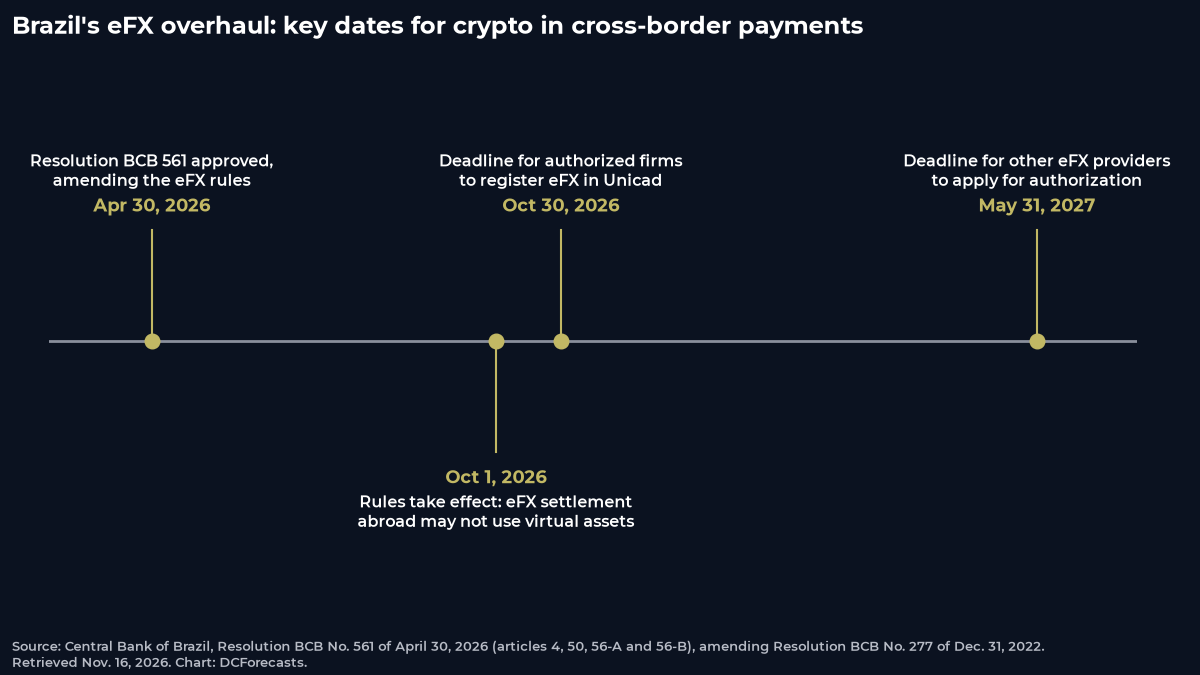
The remarks matter because they show how the central bank is reading rules that already took effect on Oct. 1. Those rules, set out in Resolution BCB No. 561, ban the use of virtual assets in a key leg of Brazil’s international payment services.
What Is a Stablecoin Sandwich?
A stablecoin sandwich uses a digital token as the filling between two ordinary currencies. A company receives Brazilian reais, converts them into a dollar- or euro-backed stablecoin, sends the tokens abroad and converts them into local money for the recipient.
The appeal is speed and cost. Stablecoins move around the clock and can bypass several layers of correspondent banking.
That is also why payment firms have been eager to use them for cross-border transfers. The central bank’s task has been to decide where that model fits within Brazil’s strict foreign exchange framework.
The Version Brazil Allows
According to the reports, the permitted model keeps the customer inside a normal foreign exchange transaction. The client buys an FX service from a regulated institution, and the institution can use virtual assets in the background as settlement plumbing.
In that setup, stablecoins act as a possible replacement for the messaging and settlement links traditionally associated with SWIFT. The customer never takes ownership of the tokens.

The Version Brazil Bans
The prohibited model hands the stablecoins to the customer along the way. An institution sells tokens to the client as part of a packaged service, transfers ownership to them and then converts the tokens into foreign currency abroad.
Romantini said institutions cannot offer that sequence when the customer’s real purpose is to swap reais for dollars. He added that a customer who independently buys an FX service and later uses the funds for something else would not automatically create the same problem for the institution.
He linked the concern to the “dólar cabo,” an informal system long used in Brazil to move money across borders outside regular banking channels. In his view, stablecoins have become a newer way to run similar transfers.
The Rule Behind the Stablecoin Sandwich Line
The legal basis is public. Resolution BCB No. 561, approved on April 30, 2026, rewrote the central bank’s rules for eFX, Brazil’s term for international payment and transfer services offered by fintechs and other providers.
Its new Article 50 says payments between an eFX provider and its counterparty abroad must be made only through a foreign exchange transaction or a non-resident real account in Brazil, “with the use of virtual assets prohibited.” The same ban applies to providers still waiting for authorization.
The resolution also tightens how the service works. Purchases through digital payment solutions not integrated with an e-commerce platform are capped at $10,000, as are transfers tied to investments in financial and securities markets.
Money flows are tightened on the domestic side too. Reais can reach an eFX provider only from an account in the sender’s own name at a regulated institution, by boleto, or through a non-reloadable payment instrument capped at R$1,000. Providers may not net the reais they receive against the reais they pay out.
Authorized institutions had until Oct. 30, 2026, to register their eFX activity in the central bank’s Unicad system. Providers outside the permitted list must apply for authorization by May 31, 2027, or stop offering the service within 30 days.
Firms must also keep eFX records for ten years. The resolution even adds a dedicated reporting code for eFX purchases of virtual assets.
What It Means for Crypto Users in Brazil
The new line targets how payment providers settle cross-border transfers. The resolution does not address individuals who buy and hold crypto through licensed platforms.
That fits a broader pattern. Brazil is building a formal home for crypto rather than pushing it out, as shown by the 120 firms now queuing for a crypto license from the central bank.
For Bitcoin, the distinction is helpful. The central bank’s concern centers on dollar tokens used as a shortcut around FX controls, not on Bitcoin held as a long-term asset.
The stablecoin market is also in a cooling phase globally, with total supply recently dropping by $16 billion in a month. Tighter rules in Brazil add another reason for issuers and payment firms to adjust.
For now, the message to Brazilian fintechs is clear. Stablecoins can sit behind the scenes of a regulated FX deal, but they cannot become the product.
DC Forecasts is a leader in many crypto news categories, striving for the highest journalistic standards and abiding by a strict set of editorial policies. If you are interested to offer your expertise or contribute to our news website, feel free to contact us at [email protected]












Discussion about this post