


Polymarket US is taking the short, simple trade format it built on Bitcoin and other crypto prices and pointing it at oil and natural gas.
On Nov. 17, QCX LLC, the company that operates Polymarket US, self-certified new event contracts with the Commodity Futures Trading Commission. They cover WTI crude oil, Brent crude oil and natural gas futures prices.
The filings say the exchange intends to list the products no earlier than Nov. 19, 2026.
The first published examples are blunt yes-or-no questions: will WTI crude be above $100, and will natural gas be above $3.50, at 2:30 p.m. ET on Dec. 8?
The bigger question is whether energy traders will embrace a format that, until now, has mostly been about crypto.
What Polymarket US Filed With the CFTC
The WTI and natural gas submissions are single, specific event contracts. In its cover letter, the exchange says it filed them that way to stay consistent with CFTC Staff Letter No. 26-22 from July 24, 2026, rather than as one broad template.
Those contracts then act as the reference for wider “class” certifications. The same day, Polymarket US filed class certifications for WTI and Brent, which let it list many versions with different price levels and dates under the same rules.
According to the WTI terms and conditions posted on the CFTC website, each contract has a notional size of $1. It pays $1 if the condition is met and nothing if it is not.
Margin is 100% of the amount at risk, so there is no leverage. There are no position limits, but the exchange sets a position accountability level of $25,000 of notional exposure.

The filings were signed by Nick Rice, Polymarket US’s head of markets.
How the Contracts Settle
The settlement design will feel familiar to crypto users. Prices come from Chainlink data streams, the same oracle network that powers many on-chain markets.
The contracts do not use the last traded price or the official exchange settlement. Instead, they use the mid price between bid and ask quotes in Chainlink’s futures price feed, and only reports published while the market is marked open count.
If the data is delayed, the exchange can push back expiration. The terms set the expiration date as the earlier of the day the source publishes enough data to decide the outcome, or seven days after the measured period ends.
We believe this is a meaningful detail. Using a crypto-native oracle to settle a regulated contract on traditional energy prices shows how far blockchain data infrastructure has moved into mainstream markets.
Where Oil and Gas Stand Against the Strikes
Neither of the first two thresholds is close to today’s market, which is what makes them interesting.
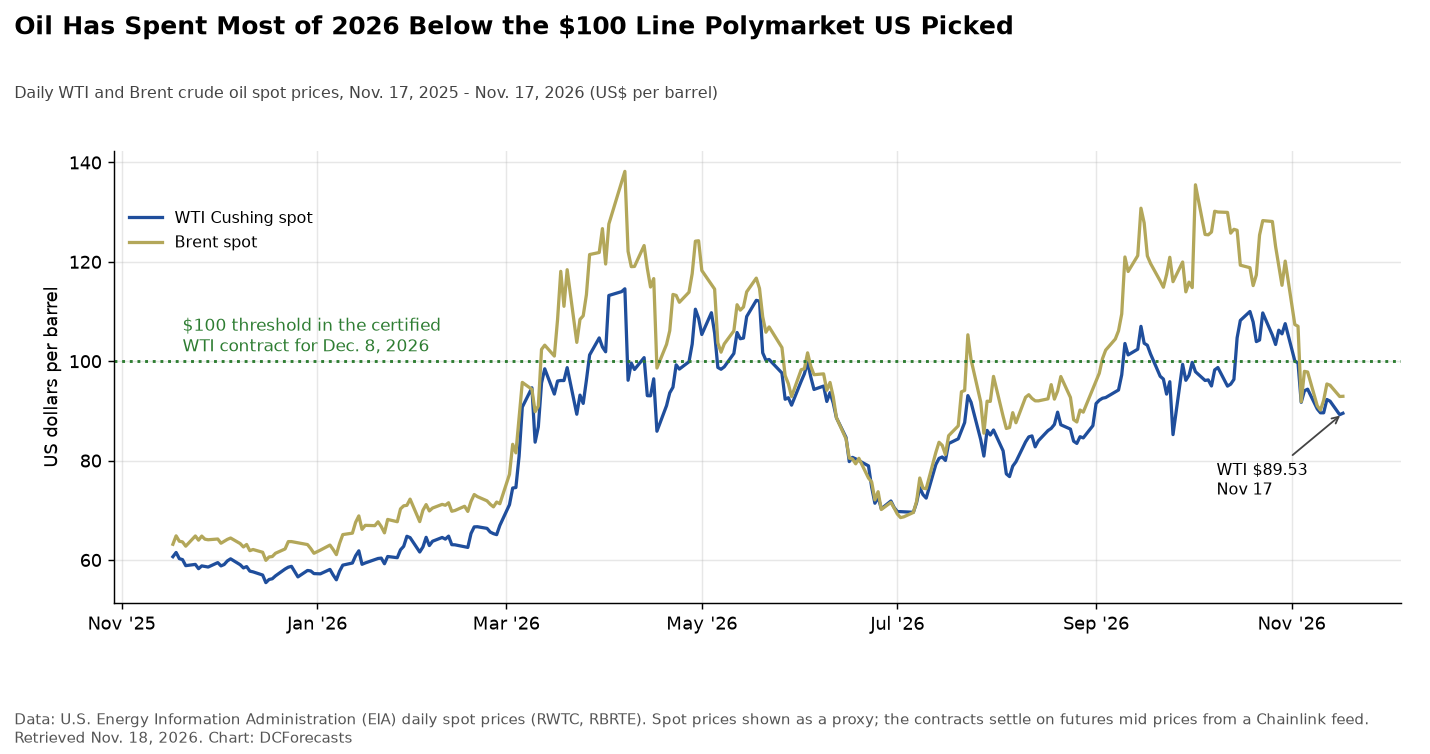
WTI spot crude settled at $89.53 a barrel on Nov. 17, according to the U.S. Energy Information Administration. Reaching $100 would take a gain of about 11.7%.
That is not unthinkable. WTI spot closed above $100 on 44 of the 221 trading days in 2026 so far, most recently on Nov. 2, and peaked at $114.58 on April 7. A year ago it was near $61.
Brent spot finished Nov. 17 at $92.94.
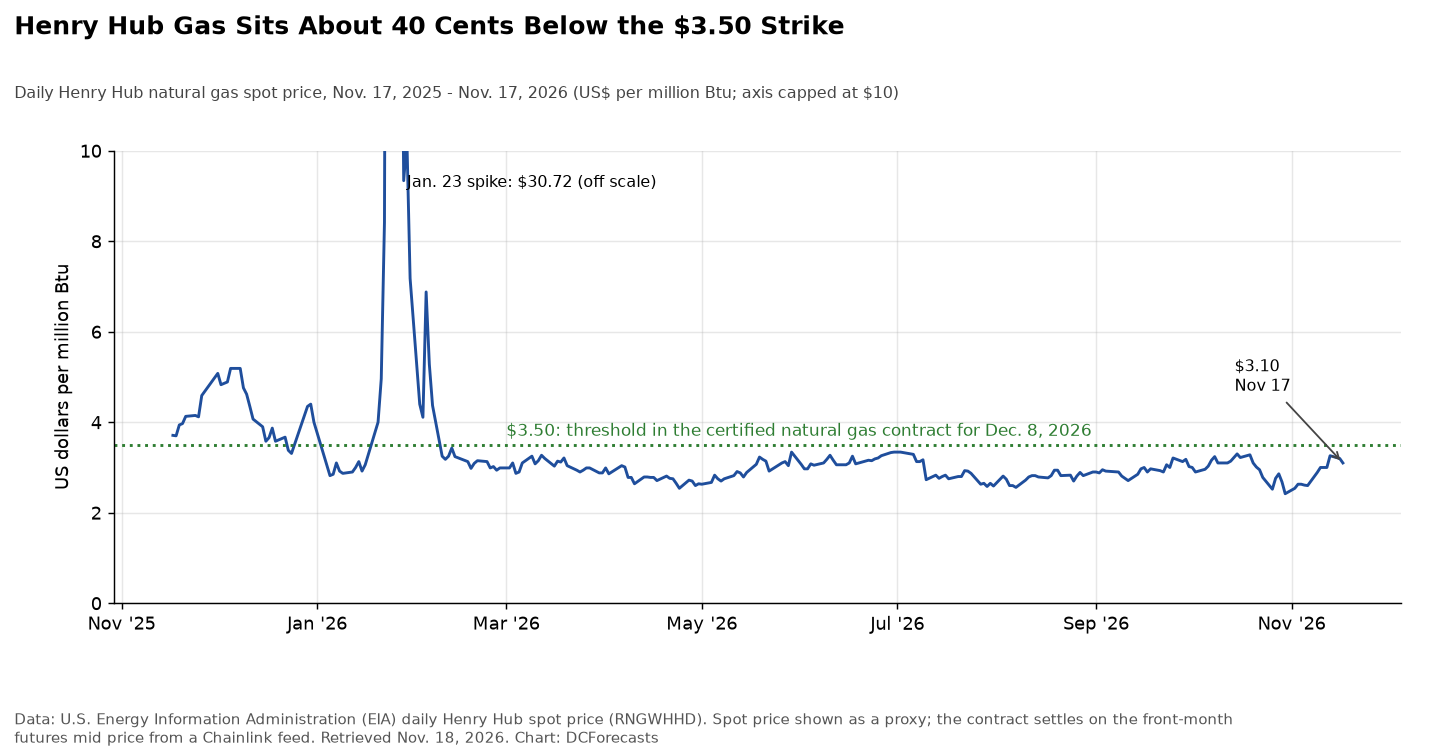
Natural gas is a different story. Henry Hub spot was $3.10 per million Btu on Nov. 17, so $3.50 needs a rise of about 13%.
Spot gas has closed above $3.50 on only 14 days this year, the last on Feb. 6, after a winter spike that briefly hit $30.72 on Jan. 23.
Crypto Built the Template
Polymarket US said this week that its short-duration crypto up-or-down markets passed $1 billion in trading volume within six weeks, drawing more than 300,000 traders. Those markets cover Bitcoin, Ether, Solana and XRP in windows as short as five minutes.
Gold and silver already trade in similar short windows on the exchange. Oil and gas would extend that model to the world’s most closely watched energy benchmarks.
For Bitcoin, the takeaway is encouraging. Price contracts on BTC proved there is real demand for simple, fully funded, regulated bets on market direction, and that demand is now pulling traditional commodities into the same format.
A Crowded Field Under Scrutiny
Polymarket US is not alone. Rival Kalshi has been expanding fast, including Bitcoin-margined perpetual futures through Anchorage, and it certified its own Brent and natural gas futures products with the CFTC on Nov. 12, according to the agency’s product filings list.
The sector also faces pressure. The CFTC recently froze some Kalshi markets tied to Trump word bets, and lawmakers have pushed back on how prediction markets are regulated.
Energy price contracts may be easier to defend than sports or political wagers. They track public benchmarks that companies and households already watch and hedge.
What to Watch After Nov. 19
The first test is simple: whether the contracts go live on schedule and attract real volume next to the crypto markets that inspired them.
The second is how many strike levels and dates Polymarket US adds under its class certifications.
For crypto, the trend is clear. Bitcoin’s price markets helped prove the model, and oracle data from the blockchain world now sits underneath regulated bets on oil and gas. That is another sign of crypto infrastructure becoming part of mainstream finance.
DC Forecasts is a leader in many crypto news categories, striving for the highest journalistic standards and abiding by a strict set of editorial policies. If you are interested to offer your expertise or contribute to our news website, feel free to contact us at [email protected]










Discussion about this post