


Kalshi Trump word bets, one of the most traded corners of the prediction market boom, are frozen while the Commodity Futures Trading Commission decides whether Kalshi should have listed them at all.
In an order dated Nov. 13, the CFTC stayed the listing of Kalshi’s “What nicknames will Trump say before 2027?” contract and its TRUMPSAY series, effective immediately. Kalshi has until Dec. 11 to answer.
Kalshi has said it is complying with the order.
Our review of Kalshi’s public market data shows these markets have traded more than 107 million contracts since August 2025. The question now is whether a market settled by one person’s words can ever pass the CFTC’s manipulation test.
What the CFTC Order Says
The order does two things. It opens a proceeding to determine whether Kalshi’s certification that the contracts comply with the Commodity Exchange Act was false, and it halts trading while that proceeding runs.
The legal hook is Core Principle 3, which bars an exchange from listing contracts that are “readily susceptible to manipulation.”
The Commission wrote that it “presumptively believes the certification is false.” It also stressed that the order “makes no final determination as to whether the contracts comply with the Act.”
That distinction matters. This is a stay, not a ban and not a finding of wrongdoing. The order describes no specific case of manipulation.
Why Mention Markets Drew Scrutiny
The timeline explains the CFTC’s position. Kalshi self-certified the “Will <word> be said by Donald Trump” series on Feb. 20, 2025, and amended its rules on multi-word phrases on July 29, 2026.

On Sept. 22, CFTC staff issued an advisory, Letter No. 26-27, saying mention markets may be viewed as “presumptively readily susceptible to manipulation.” Staff said such contracts “may be controlled by a single individual, a small group of individuals, or persons with access to or influence over the individual.”
Staff said it expected “a heightened showing” before any exchange listed one.
According to the order, Kalshi listed the 2027 nickname contract on Oct. 1, roughly a week later, without amending its certification or filing a new one. The first nickname market opened on Nov. 18, 2025, a year ago today, the order notes.
The contracts are binary, fully collateralized and settle in cash with a $1.00 notional value. Settlement sources include the president himself, his verified social media accounts and major media outlets.
How Big Kalshi Trump Markets Became
We pulled every TRUMPSAY event from Kalshi’s public market data. The family, covering weekly, monthly, nickname, country and company markets, has traded 107.3 million contracts in events opened since August 2025.
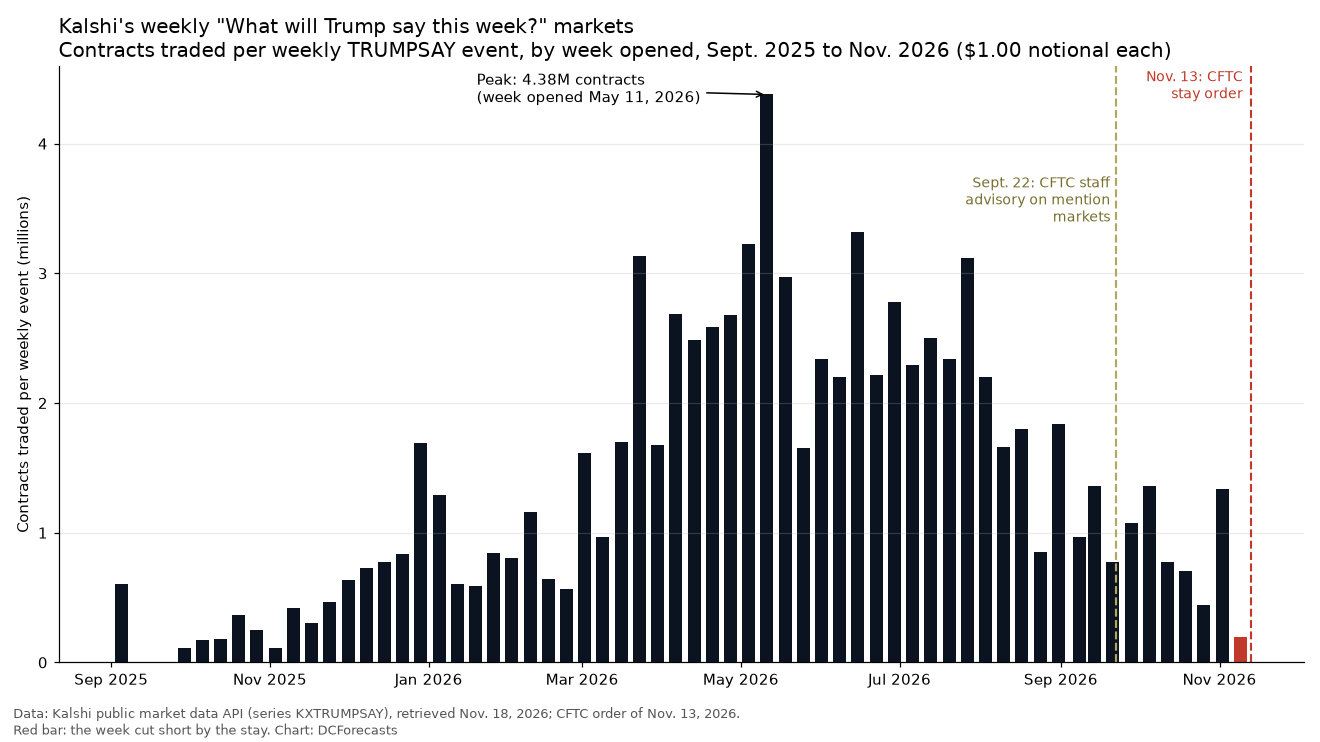
The weekly “What will Trump say this week?” market was the engine. It peaked at 4.38 million contracts in the week that opened May 11, 2026.
Activity was already cooling before the order. Weekly-series volume fell from 12.85 million contracts in events opened in June to 3.29 million in October.
The final week, which opened Nov. 9, traded just 193,005 contracts before the stay. The week before had traded 1.34 million.
Kalshi’s data now shows 71 markets marked inactive across the nickname, November, country and company contracts. Together they still carry about 48,777 contracts of open interest.
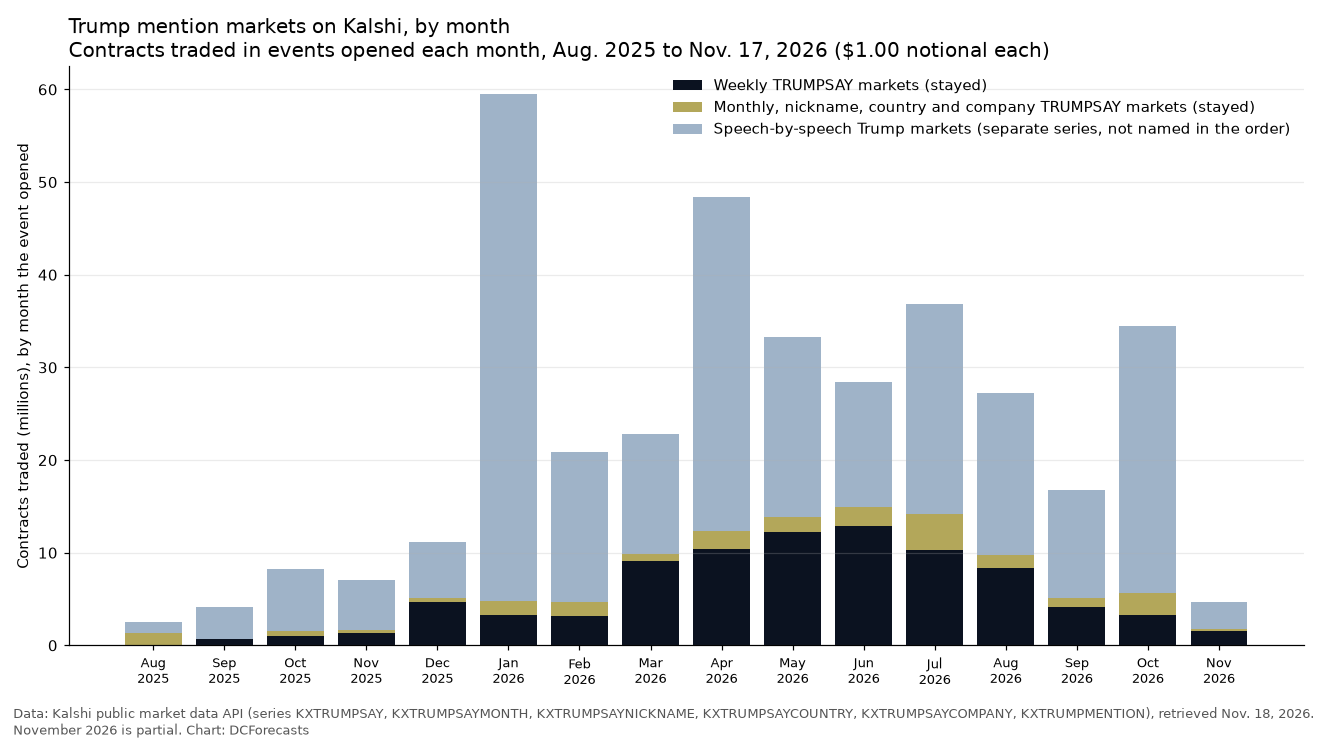
The order does not name Kalshi’s separate speech-by-speech Trump markets. Those have been even larger, at 263.5 million contracts across 262 events since March 2025. The most recent event in the data covered the Nov. 11 Veterans Day remarks.
Why This Matters for Crypto and Prediction Market Traders
The same agency is writing the rules for a growing share of crypto trading in the U.S., from perpetual futures to the round-the-clock trading roundtable it has scheduled for Dec. 15.
On prediction markets, the CFTC has mostly been in expansion mode. It has defended nationwide access against state limits, even as senators objected to its geofencing order, and a House Oversight memo has examined insider trading on these platforms.
This order shows the other side of that approach. The CFTC is backing the market structure, but it is also policing contract design.
We believe the distinction is healthy. A market whose outcome one speaker can decide is very different from a market priced by millions of buyers and sellers around the world.
Bitcoin sits firmly in the second group, with no single person able to set its price. Clear lines between those two kinds of contracts should help the regulated venues that list both.
What Happens After Dec. 11?
Kalshi must file a written answer showing why its certification should not be found false. The Commission will then decide what further action, if any, is warranted.
If the Commission decides more work is needed, the order says it will notify Kalshi and set the procedures, which “may include the submission of additional information and a determination by the Commission.”
The order also says it “reflects no final determination that a presidential mention contract can or cannot comply with the Act.” That leaves the door open for a redesigned product.
We would watch three things:
- Whether Kalshi files amended terms with the “heightened showing” staff asked for in September.
- Whether the CFTC applies the same test to speech-by-speech markets and to other public figures.
- Whether volume in the remaining mention markets shifts toward contracts tied to market data rather than personal conduct.
The CFTC’s product filing page now shows the original certification with a short remark: “Certification Stayed.” The next move belongs to Kalshi.
DC Forecasts is a leader in many crypto news categories, striving for the highest journalistic standards and abiding by a strict set of editorial policies. If you are interested to offer your expertise or contribute to our news website, feel free to contact us at [email protected]









Discussion about this post