



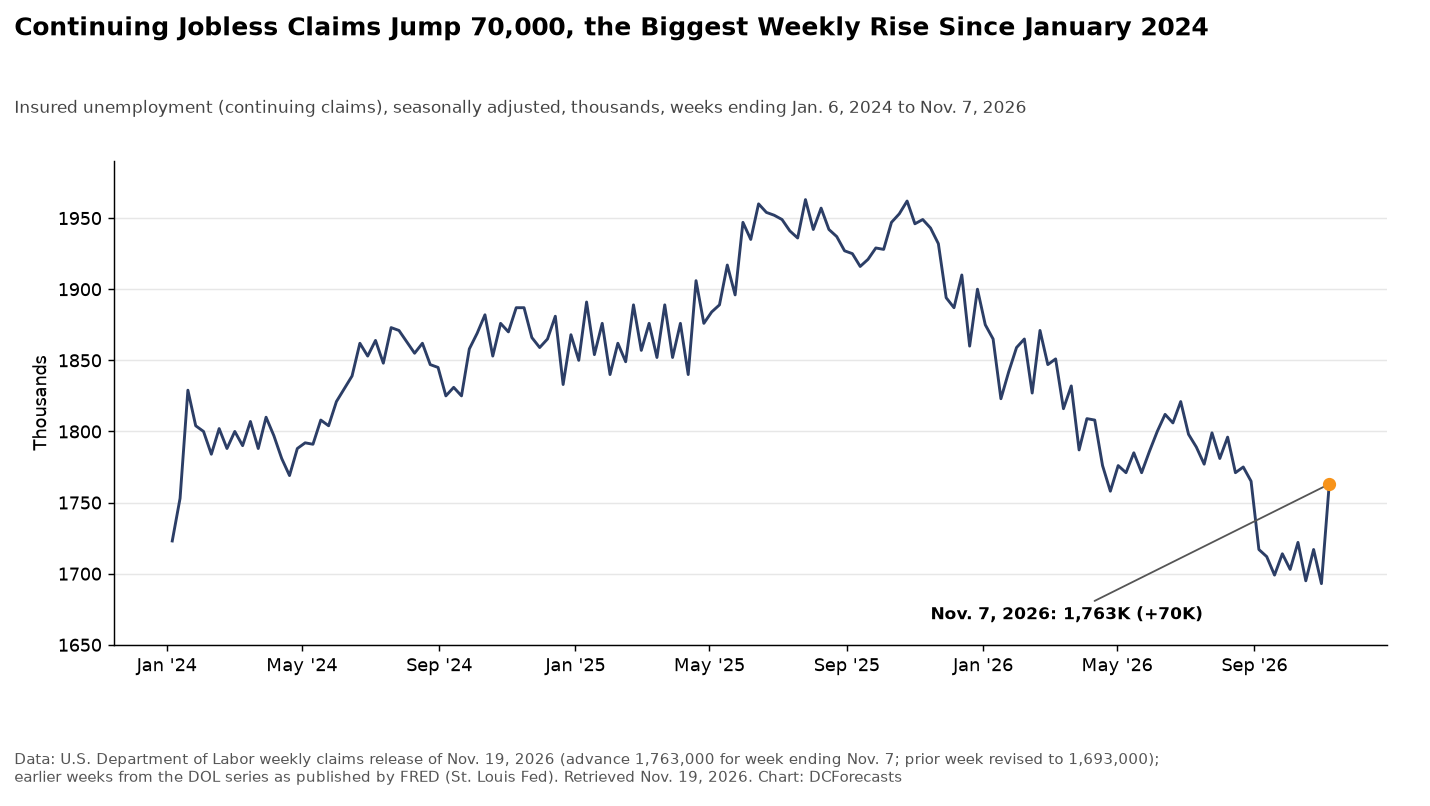
The number of Americans collecting jobless benefits just rose by the most in nearly three years. Continuing jobless claims jumped by 70,000 to 1,763,000 in the week ending Nov. 7, according to the Labor Department’s weekly report released on Thursday.
That is the largest weekly increase since January 2024. It lands less than three weeks before the Federal Reserve meets again, with most officials leaning toward another rate hike.
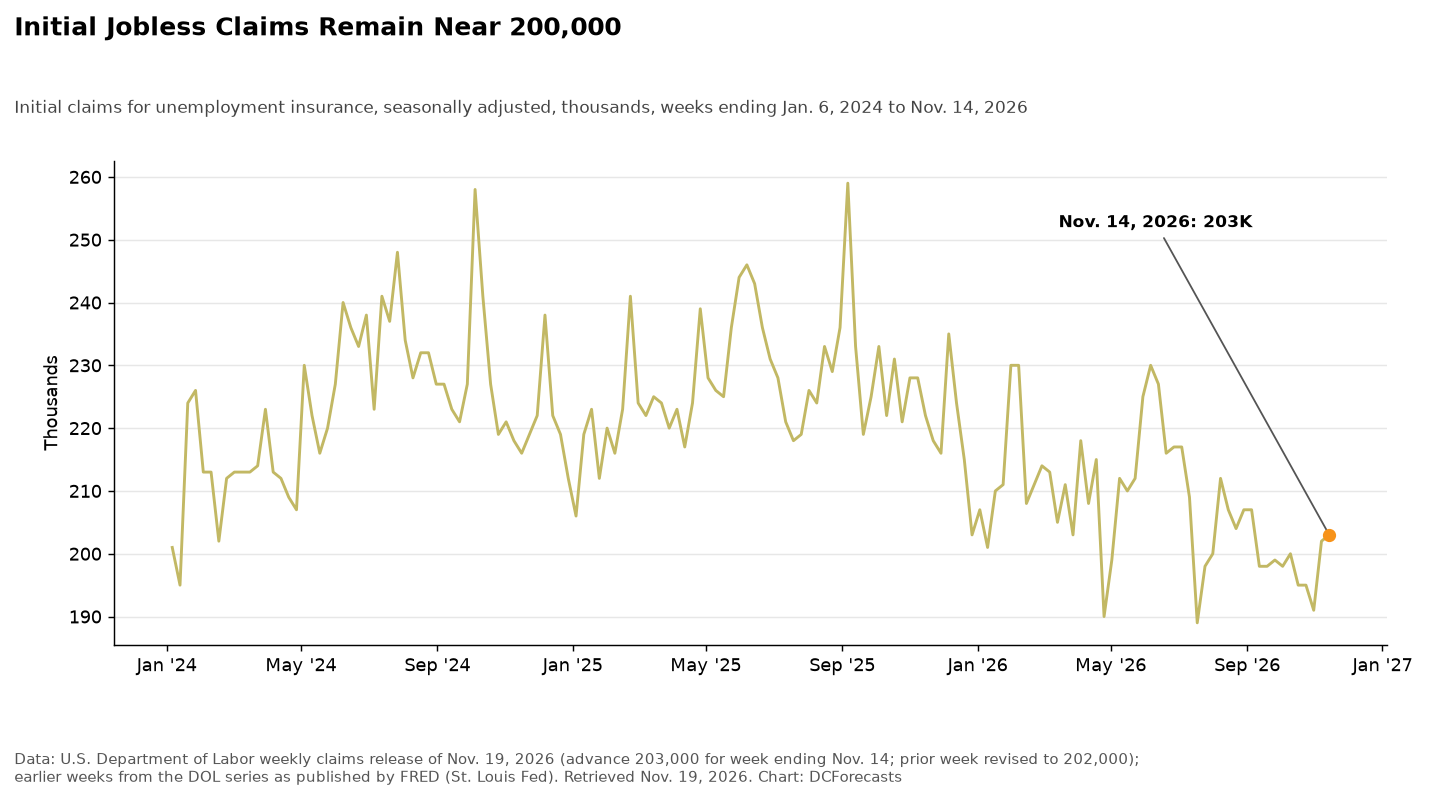
New layoffs, however, remain rare. Initial claims edged up by just 1,000 to 203,000, keeping the headline number close to the low end of its range since 2024.
Continuing Jobless Claims Post the Biggest Rise Since January 2024
Continuing claims count people who keep receiving unemployment benefits after their first week. When the number climbs, it usually means laid-off workers are taking longer to find new jobs.
The prior week was revised down to 1,693,000, which makes the latest jump exactly 70,000. The last bigger move came in the week ending Jan. 20, 2024, when continuing claims rose by 76,000.
The new level is the highest since the week ending Aug. 29, 2026. The insured unemployment rate, however, held steady at 1.1%.
The unadjusted numbers show why the move stands out. Before seasonal adjustment, insured unemployment in state programs rose by 42,996, or 2.9%, to 1,542,726. The seasonal factors had expected a decline of 1.2% that week.
In other words, the increase came at a time of year when the rolls normally shrink, which is what pushed the adjusted figure up so sharply.
Context matters here. Even after the jump, continuing claims are below the 1,875,000 recorded in the first week of 2026 and well under the 2025 peak of 1,963,000 in late July.

Initial Claims Show Few New Layoffs
The front end of the labor market looks calmer. Seasonally adjusted initial claims came in at 203,000 for the week ending Nov. 14, up from a revised 202,000.
The four-week moving average rose by 2,000 to 197,750. A year earlier, initial claims stood at 222,000.
Before seasonal adjustment, states logged 197,492 new claims, down 5.7% from the prior week, slightly less than the 6.0% drop the seasonal factors expected. The comparable week in 2025 saw 218,228.
Claims from former federal civilian employees rose by 146 to 732 in the week ending Nov. 7, a small number in a national total of about 200,000.
The state data for the same week showed the largest increases in California (4,800), New Jersey (3,679), Missouri (3,168), Texas (2,631) and Minnesota (2,583).
Why the Fed Will Notice Slower Hiring
The Fed’s target range sits at 3.75% to 4%, after a hike in September. Minutes from the October meeting, released on Wednesday, showed that almost all officials expected further hikes to be appropriate under their baseline outlooks.
As DCForecasts reported, nearly every official expects more hikes, and the New York Fed’s survey of market participants pointed to one in December. In that record, the labor market gave the Fed little reason to back off, with unemployment at 4.2% in September.
A sustained climb in continuing claims would complicate that view. If job seekers stay on benefits longer, hiring is slowing, and that weakens the case for tightening further.
One week is not a trend, and claims data are often revised. But the timing is notable. The next policy meeting runs Dec. 8-9, according to the Fed’s calendar, and it will include fresh economic projections.
What Softer Labor Data Could Mean for Bitcoin
Bitcoin has traded through a tough stretch as rate-hike expectations built up. It was changing hands around $63,600 on Coinbase on Thursday afternoon.
Higher rates raise the appeal of cash and bonds, which tends to weigh on assets with no yield. Any sign that the Fed may stop sooner than expected could ease some of that pressure.
This is the second data point this week that cuts against more hikes. Earlier on Thursday, DCForecasts noted that U.S. gas prices fell the most in a week since 2008, a shift that could cool inflation readings.
We believe that combination matters for Bitcoin investors. Cooler energy prices and slower rehiring would give the Fed room to pause, a backdrop that has historically supported risk assets.
What to Watch Next
Next week’s claims report will show whether the rise in continuing claims holds or reverses. A second strong increase would make the signal harder to dismiss.
The Fed’s December decision will also depend on inflation data and the November jobs report. For now, the labor market is not breaking, but it is no longer giving the Fed an easy case for another hike.
For Bitcoin, a Fed that stops tightening sooner would remove one of the biggest headwinds of the past two months.
DC Forecasts is a leader in many crypto news categories, striving for the highest journalistic standards and abiding by a strict set of editorial policies. If you are interested to offer your expertise or contribute to our news website, feel free to contact us at [email protected]












Discussion about this post