



Bitcoin Core wallet developers have deprecated one of the software’s oldest habits: encrypting a wallet after it has already been created and used.
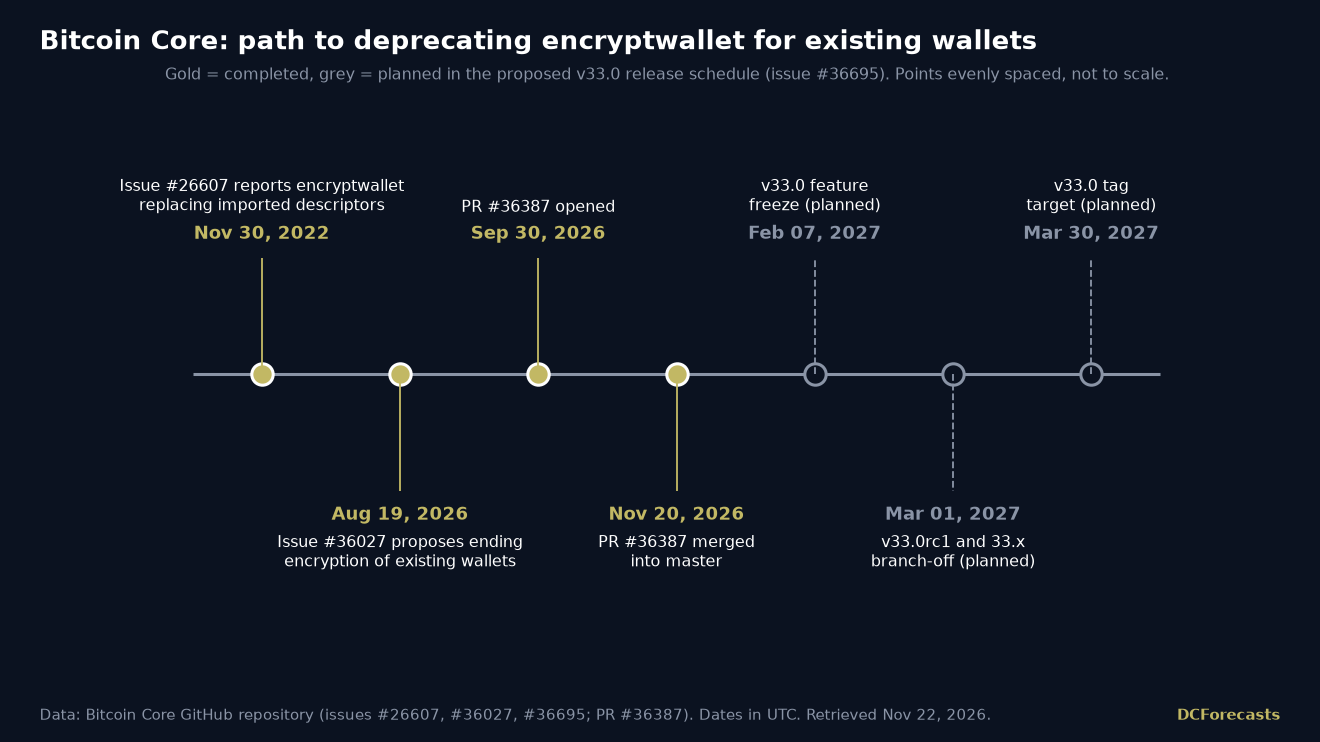
The change, pull request #36387 by contributor David Gumberg, was merged into Bitcoin Core’s master branch late on Nov. 20 (UTC) by wallet maintainer Ava Chow.
From now on, the encryptwallet command returns a deprecation error unless a node operator starts the software with -deprecatedrpc=encryptwallet.
For self-custody users, the message is simple. Encryption is not going away. It is moving to the moment a wallet is born.
The bigger question is how many people still run wallets that were locked after the fact, and what they should do about it.
What Changed in the Bitcoin Core Wallet Code?
The merged code marks encryptwallet as deprecated and says it “will be removed in a future major release.” The project’s release note is explicit that “support for creating encrypted wallets is not going away or being changed.”
In other words, wallet encryption itself stays. A user who wants an encrypted wallet should create it with a passphrase from the start, using the createwallet command with its passphrase argument.
The project’s updated wallet guide now says encrypting an existing wallet “is deprecated and not recommended.” Changing the passphrase on an already encrypted wallet still works as before.
The pull request was opened on Sept. 30 and drew formal approvals from several reviewers, including Chow, before it landed. That is a normal pace for a change that touches how people protect their keys.

Three Footguns Behind the Wallet Encryption Decision
Gumberg’s pull request lists three problems with encrypting a wallet that started life unencrypted.
- Leftover key material. The software makes no attempt to scrub old, unencrypted keys from the disk. The PR calls that “difficult and dangerous,” and on some SSDs “infeasible.”
- Changed spending rules. Encrypting a wallet with manually imported descriptors can change its spending conditions “out from under the user.” That bug, issue #26607, has been open since Nov. 30, 2022.
- Backup traps. New keys are generated after encryption, so restoring a backup made before encryption “may result in loss of funds.”
Chow had raised the same idea in August. Her proposal, issue #36027, added a sharper point: once a wallet is encrypted, existing coins do not move, so anyone holding an old unencrypted backup can still steal them.
That is the heart of it. Encrypting later can give a false sense of safety.
Why an Old Feature No Longer Fits
History explains why the command existed at all. Chow noted that when encryption was introduced, Bitcoin Core could load only one wallet at a time, created it by default and filled it with keys.
Back then, encrypting after the fact was the only option. Modern Bitcoin Core has no default wallet, supports many wallets and has allowed “born encrypted” wallets for several years.
We believe retiring the old path is a sign of a maturing codebase. Fewer ways to do the same thing means fewer edge cases for attackers and fewer mistakes for users.
The same week brought more wallet clean-up. On Nov. 20, maintainers also merged changes that reject payment amounts above Bitcoin’s 21 million coin limit and add silent payments (BIP352) scanning to the test framework.
Key safety is never abstract. As we reported when a reused nonce exposed 3,278 Bitcoin private keys, small implementation details can decide whether coins stay safe.
When Will Node Operators Notice?
Not right away. The change sits on the master branch, which feeds the next major release, v33.0.
A proposed schedule sets a feature freeze for Feb. 7, 2027, a first release candidate around March 1, and a final tag targeted for March 30. Even then, the old command will still work with the opt-in flag.
Upgrade habits also stretch the timeline. A Bitnodes snapshot at 17:23 UTC on Nov. 22 counted 21,873 reachable nodes. Of 19,707 reporting a Bitcoin Core version, 7,190 ran v32 and 5,331 ran v31.
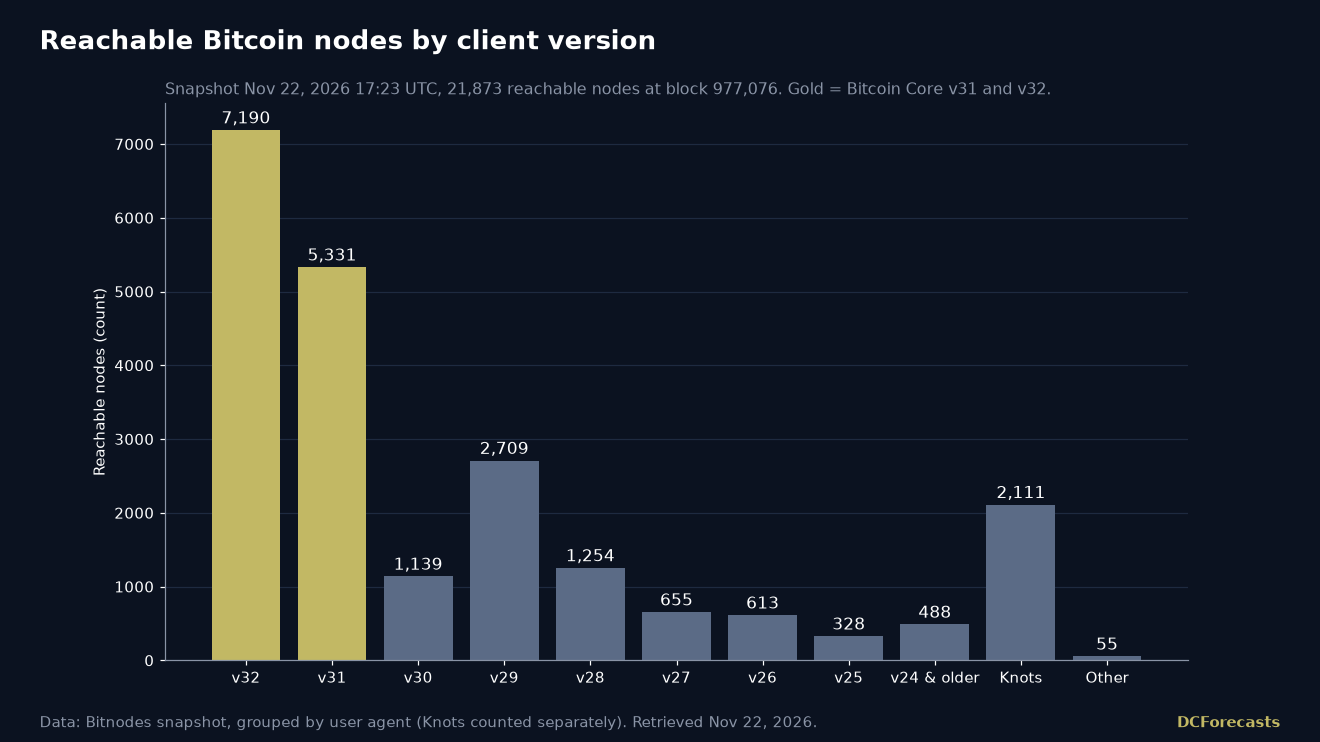
Another 6,047 Core-labelled nodes, about 31%, still run releases older than v30. Reachable nodes are only part of the picture, but the pattern is clear: many operators upgrade slowly, and that is their right.
That slow pace is one reason we think the deprecation is sensible. It gives users plenty of warning before the command is removed in a later major release.
What Self-Custody Users Can Do Now
Users who created an encrypted wallet from the start do not need to change anything.
Users who encrypted an older wallet should know that early backups may still hold readable keys. In our view, the cleanest fix follows the project’s own advice: create a new wallet with a passphrase, back it up, and move funds into it.
Anyone doing that should test the new backup and store the passphrase safely. The wallet guide warns that a lost passphrase means the coins are “lost forever.”
Self-custody keeps growing. As we covered, Bitcoin Well’s self-custody users grew 44% in a year. Safer defaults in the reference wallet help every one of those holders.
We believe changes like this are how Bitcoin gets stronger: quietly, through open review, one fewer footgun at a time. The v33.0 release candidates early next year will show how smoothly users make the move to born-encrypted wallets.
DC Forecasts is a leader in many crypto news categories, striving for the highest journalistic standards and abiding by a strict set of editorial policies. If you are interested to offer your expertise or contribute to our news website, feel free to contact us at [email protected]












Discussion about this post