



A jury duty scam run by inmates on smuggled phones inside Georgia prisons leads the Justice Department’s largest-ever crackdown on scammers.
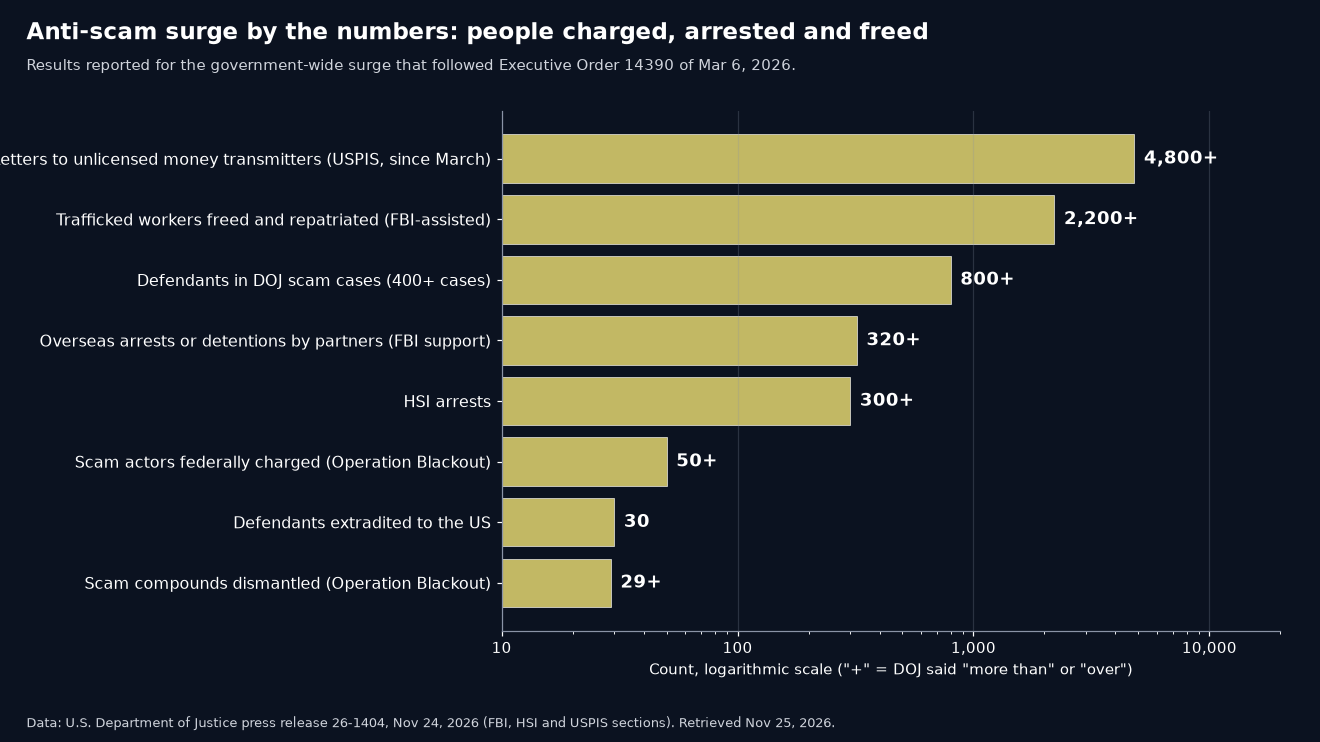
On November 24, the department said prosecutors have acted in more than 400 cases against over 800 defendants since March 6. Those actions include new charges, extraditions, guilty verdicts and sentences.
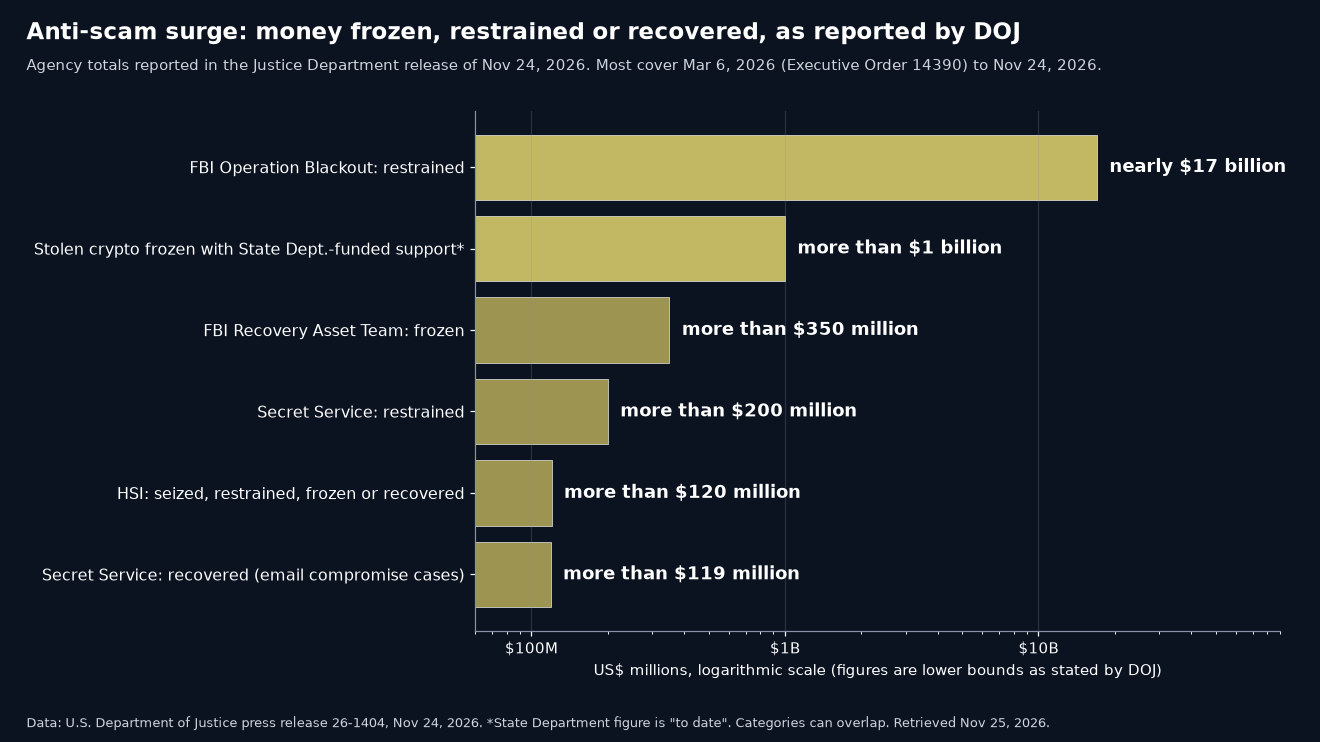
The FBI says it has restrained nearly $17 billion in illicit funds through its Operation Blackout program, the scam-center initiative it runs with foreign partners.
For crypto users, the detail that stands out is how often the money trail runs through digital assets, from cryptocurrency kiosks to fake trading apps.
The bigger question is whether this pace of enforcement can make crypto scams harder to run, and safer to avoid, for ordinary Bitcoin buyers.
How the Jury Duty Scam Worked
According to the department, gangs operating mainly from Georgia prisons used contraband phones, smuggled in by drones and corrupt guards, to call Americans.
Victims were told a warrant had been issued for their arrest because they missed jury service.
The callers said the “fine” could be cleared with a payment through a cryptocurrency kiosk. People who fed cash into those machines never saw it again.
Fourteen people were charged in three indictments in federal and state courts. Another 17 defendants were charged in state court over a scheme to smuggle phones into Georgia prisons.

The U.S. Postal Inspection Service seized three websites the inmates used to pose as federal courts. On November 13, it also sent warning letters to more than 1,300 people who had acted as money mules for the gangs.
Washington is also attacking the phones themselves. On November 19, the Federal Communications Commission approved a rule letting prisons and jails jam contraband cell phones.
We believe that matters more than any single indictment. It cuts off the tool that made this scam cheap to run at scale.
800 Defendants and Billions Frozen
The surge follows Executive Order 14390, which directed a government-wide crackdown on scam networks.
The Justice Department release reports results across several agencies:
- 30 defendants extradited to face scam charges, with cases in 85 federal districts.
- More than 29 scam compounds across Asia, Africa and the Middle East dismantled under Operation Blackout, and more than 2,200 trafficked workers freed and sent home.
- More than $350 million frozen by the FBI’s Recovery Asset Team, and more than $143 million in victim losses prevented by Operation Level Up.
- More than $200 million restrained by the Secret Service, and more than $120 million seized, frozen or recovered by Homeland Security Investigations.
The scale of the problem explains the push. Citing Gallup, the department says Americans lost an estimated $68 billion to scams in 2025, and 10% of adults were hit directly or through someone in their household.
Where Crypto Scams Fit In
Crypto shows up throughout the release, mostly as the payment rail that scammers abuse.
The State Department says the law enforcement work it funds and supports has helped U.S. and Southeast Asian police freeze more than $1 billion in stolen cryptocurrency and take down more than 1.4 million fraudulent websites and accounts.
In October, State-funded training and equipment supported raids that shut five call centers and detained eight suspected coordinators who allegedly ran fake crypto trading platforms.
The Secret Service traced a crypto investment conspiracy run from scam centers in Cambodia that targeted at least 174 U.S. victims. A Chinese national was extradited from the Netherlands in October over his alleged role.
The Criminal Division also listed a November 12 indictment in Ohio against five people tied to XETA Capital. Prosecutors say investors were falsely promised returns of 15% up to 3,000% a year, plus a €100 million guarantee against losses.
As we reported when Treasury sanctioned scam compound bosses on November 19, crypto investment fraud was the largest source of losses reported to the FBI’s Internet Crime Complaint Center in 2025.
Why Scam Centers Are the Real Target
None of these schemes relied on a weakness in Bitcoin itself.
The jury duty scam used fear and a phone call. The scam centers sold fake platforms and invented profits. The crypto was simply the fastest way to move the stolen money.
We believe the freezes show something the scammers would rather ignore: funds on public blockchains leave a trail that investigators can follow, often across borders.
That is a very different picture from cash stuffed into envelopes or wired through shell companies.
The kiosk angle also deserves attention. Earlier this month we covered a California restitution order involving Bitcoin ATM operator CoinFlip. Operators, regulators and families all have a part in stopping a Bitcoin ATM scam before the cash goes in.
A Cleaner Market Helps Bitcoin Adoption
For long-term Bitcoin holders, this is constructive news.
Every scam that sends a retiree to a crypto kiosk damages trust in the whole asset class. Taking those networks apart removes a real barrier for new buyers.
The basic rules have not changed. Courts and government agencies do not collect fines through crypto kiosks. Real exchanges do not charge “taxes” before a withdrawal. And Bitcoin held in your own wallet cannot be moved by a caller unless you send it yourself.
Attorney General Todd Blanche called the results “just the beginning.”
If that holds, the coming months could see fewer victims and a crypto market that is safer to enter, which is good news for Bitcoin’s next wave of users.
DC Forecasts is a leader in many crypto news categories, striving for the highest journalistic standards and abiding by a strict set of editorial policies. If you are interested to offer your expertise or contribute to our news website, feel free to contact us at [email protected]











Discussion about this post