


Etherscan, the most widely used Ethereum block explorer, said on Nov. 18 that someone tried to break into its customer support and ticketing system, which runs on Freshworks software.
Less than four hours later, the self-custody wallet LOBSTR reported that an intruder had actually gotten into its own Freshdesk support account, a Freshworks product, and exposed the email addresses of users who had contacted support.
Neither company reported any loss of funds. But the back-to-back notices point to a clear pattern: attackers are going after the help desks around crypto, not the blockchains themselves.
What Etherscan Said
Etherscan posted its security notice on X at 09:20 UTC on Nov. 18.
“Earlier today, we detected attempts to gain unauthorized access to our customer support and ticketing system (Freshworks),” the company wrote. It said it was investigating and “taking precautionary measures.”
The notice did not say whether the attempts succeeded, how they were carried out or whether any user data was touched.
Instead, it focused on what users should do:
- Never share private keys, seed phrases, passwords or other sensitive information.
- Be careful with unexpected links, attachments or requests, even if they appear to come from official support channels.
“Etherscan Support will never ask for your private keys or recovery phrases,” the company added.
It also helps to remember what a block explorer can and cannot do. Etherscan only displays public blockchain data. It cannot reverse, cancel or recover a transaction, so any “agent” who offers to do that, often for a fee, is a red flag.

LOBSTR Confirms Its Freshdesk Account Was Accessed
At 13:12 UTC, LOBSTR said it had “detected unauthorized access to LOBSTR’s @freshdesk support account today.”
The exposure involved “email addresses belonging to users who contacted our support — not all LOBSTR users,” the wallet said, adding: “User funds remain safe.”
LOBSTR warned anyone who had written to its support team to treat emails claiming to come from the company with extra care, because exposed addresses “could be used for phishing.” It said its staff will never ask for keys, seed phrases, passwords or verification codes, or ask users to send funds.
Etherscan reshared LOBSTR’s post shortly afterwards. Neither company has said the two incidents are linked.
Why Support Desks Are the New Target
A support ticket system holds exactly what a scammer wants: real names, email addresses and the details of a user’s earlier problem. With that, a fake “support agent” can write a message that looks convincing.
The FBI’s own numbers show how lucrative that tactic has become. Tech and customer support scams cost Americans about $2.13 billion in 2025, according to the 2025 Internet Crime Report, up from roughly $146 million in 2020.
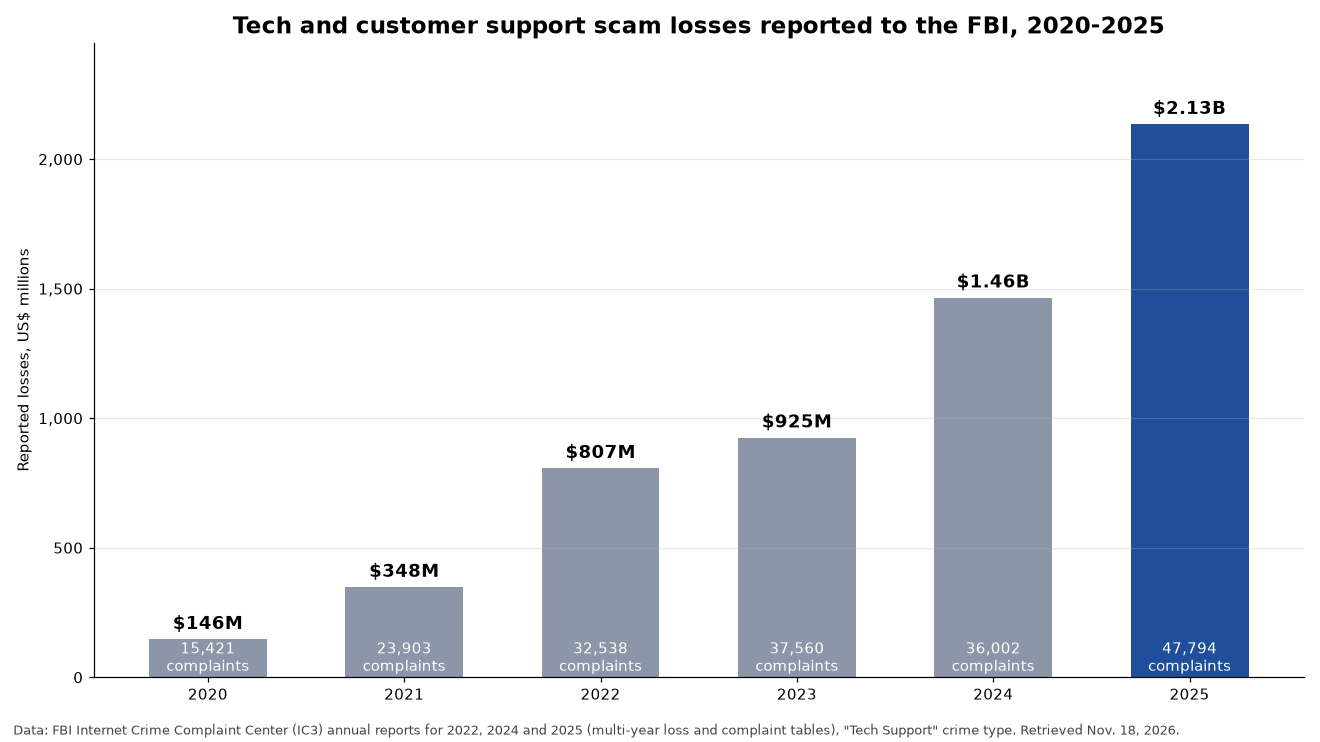
Complaints in that category climbed to 47,794 last year, from 36,002 in 2024.
Crypto plays a large role. Of the support-scam losses, about $1.23 billion involved cryptocurrency, across 17,355 complaints. Personal data breaches with a crypto link added another $939 million.
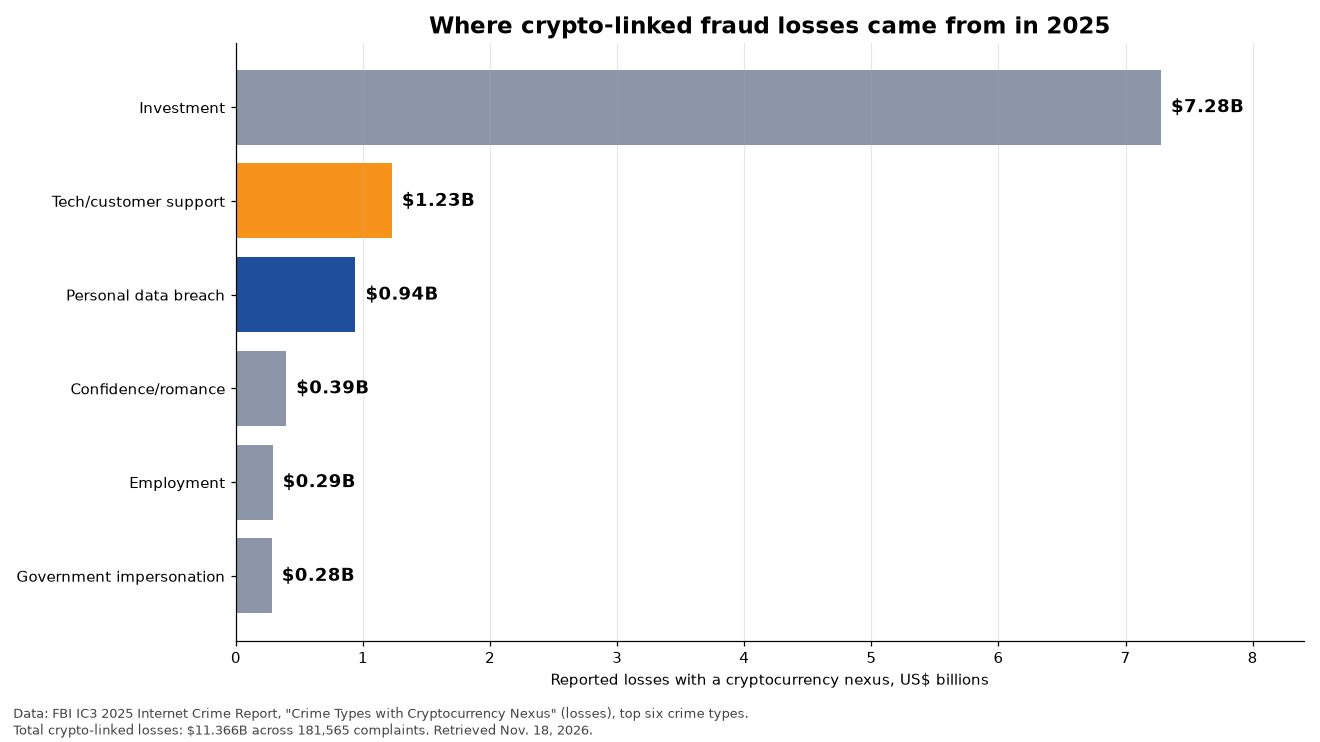
In total, the FBI said complaints involving cryptocurrency reached 181,565 in 2025, with reported losses of more than $11 billion.
How Big the Problem Has Become
The broader IC3 data puts these incidents in context. The FBI received 1,008,597 complaints in 2025, up from 859,532 in 2024, with total reported losses of nearly $21 billion.
For crypto-related complaints, the average reported loss was $62,604, and 18,589 people said they lost more than $100,000.
Older users are hit hardest. Americans over 60 reported about $7.7 billion in losses across all crime types, up 37% from a year earlier.
There is progress, too. The FBI said its Operation Level Up, launched in 2024 to warn people who are being targeted by crypto investment scams, has notified more than 8,000 victims and reduced losses by more than $500 million.
A Week of Third-Party Breaches
The Etherscan and LOBSTR notices land in a busy week for vendor-side incidents.
On Nov. 16, Trezor disclosed that its shipping partner had been breached, exposing about 27,000 buyers’ details. A day later, researchers traced a supply chain attack through Optimizely that hit 178 brands and tried to swap wallet addresses.
And on Nov. 18, the FCC’s new port-out fraud rules took effect, after a SIM swap thief was sentenced to six years for stealing $11.6 million.
In each case, the weak point was a company or service sitting next to the user, not the underlying blockchain.
What Crypto Users Should Do Now
The good news is that none of these incidents broke Bitcoin, Ethereum or any wallet’s cryptography. Funds held in self-custody stay safe as long as the keys stay private.
That makes a few habits especially important this week:
- Treat any unexpected “support” email with suspicion, especially if you have contacted Etherscan or LOBSTR before.
- Never type a seed phrase into a website, form or chat. No legitimate support team needs it.
- Go to a service’s website directly instead of clicking links in emails.
- Report suspected scams to the FBI’s IC3.
Bitcoin was built so that no help desk ever has to hold your money. Breaches like these are a reminder of why that design matters, and why the private key should never leave its owner’s hands.
DC Forecasts is a leader in many crypto news categories, striving for the highest journalistic standards and abiding by a strict set of editorial policies. If you are interested to offer your expertise or contribute to our news website, feel free to contact us at [email protected]












Discussion about this post