


Scott Bessent has stepped into the Federal Reserve’s December debate, telling the central bank on Friday that a half-point rate hike would be looking in the wrong direction.
Speaking on CNBC’s “Squawk on the Street” on November 20, the Treasury Secretary pointed to the slide in crude oil and gasoline since the November 3 election.
“I would encourage the Fed to look forward, not backwards,” he said.
For Bitcoin investors, the timing matters. BTC traded near $59,900 early Sunday, according to CoinGecko, roughly 19% below where it stood on November 12, as rate-hike fears weighed on risk assets.
The bigger question now is whether the Fed’s December 8-9 meeting delivers the quarter-point move markets expect, or the bigger shock one governor wants.
What Scott Bessent Said About a Half-Point Hike
Asked whether a 50 basis point hike in December would be a mistake, Bessent did not name the official behind the idea.
He said the governor pushing for it had dissented at the January meeting in favor of a bigger cut, adding: “So, it seems somewhat peripatetic to now want the bigger hike just 12 months or 11 months later.”
He then made the energy case. “The headline inflation numbers have been very noisy based on the energy supply shock, and the energy supply shock works two ways,” he said.
In his view, the recent fall in crude and gasoline prices is “going to substantially influence the inflation numbers.”

We think that is the core of his argument: the Fed should price in the energy relief that is already under way rather than react to inflation readings that were set by last spring’s oil spike.
Waller’s Case for Shocking the Market
The half-point idea came from Governor Christopher Waller, who told CNBC on November 18 that a 50 basis point increase is probably necessary at the December meeting.
“I’m very, very concerned about inflation. It’s kind of headed in the wrong direction, and it’s spreading out,” Waller said. “You might need to, like, shock people.”
He also said the Fed has to “take back the three insurance cuts we put in last year,” and possibly go further.
Waller left a door open, though. He said a quarter-point hike could work if the Fed clearly signaled another move in January.
Not every official agrees. New York Fed President John Williams said on Tuesday, in comments CNBC reported, that “I don’t think the situation calls for dramatic action.”
The record behind Bessent’s jab is more mixed than his summary. Fed statements show Waller dissented in January 2026 in favor of a quarter-point cut while the Committee held rates. The half-point cut dissent came a month earlier, from Governor Stephen Miran, at the December 2025 meeting.
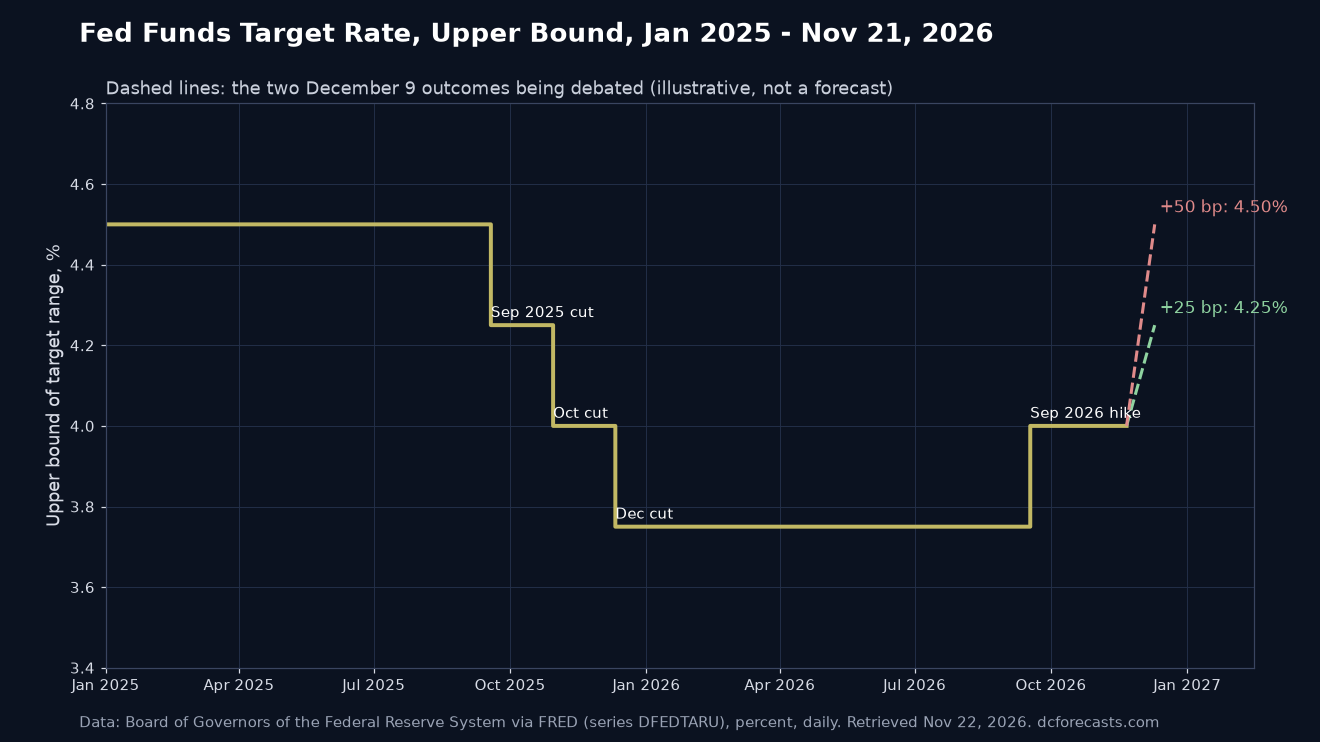
Either way, the policy path is clear in the data. The Fed cut three times in 2025, held through the summer, then hiked to a 3.75% to 4% range on September 16, 2026.
The Oil Numbers Behind the Pushback
The direction of Bessent’s energy claim lines up with official price data, even if the numbers alone cannot settle his “biggest drops in history” description.
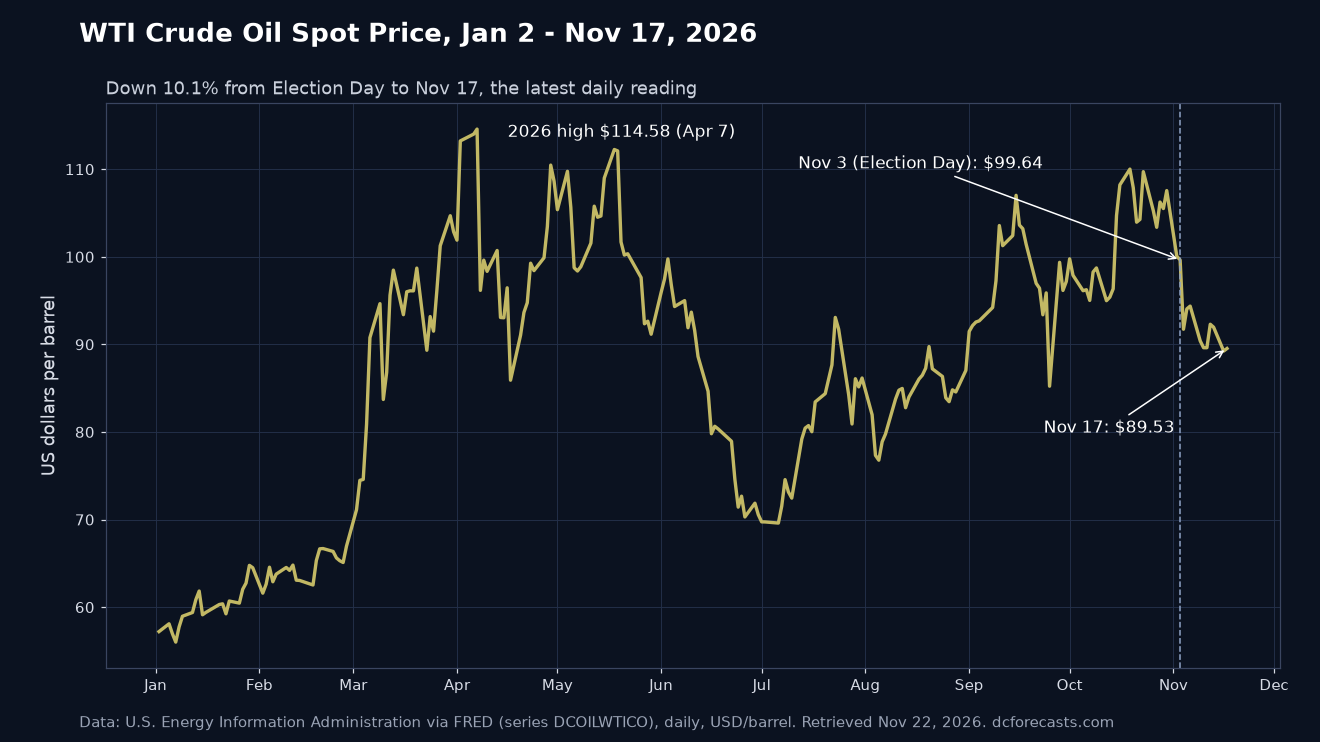
The WTI crude spot price fell from $99.64 a barrel on Election Day to $89.53 on November 17, a drop of about 10.1%, according to U.S. Energy Information Administration data published by the St. Louis Fed.
That is far below the 2026 peak of $114.58 reached on April 7, after the Iran strikes pushed energy costs higher.
Gasoline followed. The EIA’s weekly average for regular gas slid from $4.153 a gallon on November 2 to $3.805 on November 16, a decline of about 8.4%, a move we covered when gas prices posted their biggest weekly drop since 2008.
The inflation picture remains hot, which is why the hawks have a case. The consumer price index stood 3.7% above its year-earlier level in September, well above the Fed’s 2% goal.
The question is timing. Energy moves feed into headline prices quickly, so the next few readings could look very different from the ones that pushed Waller toward a bigger hike.
Why the December Fed Rate Hike Size Matters for Bitcoin
For Bitcoin, the gap between a 25 and a 50 basis point move is about more than one meeting.
A half-point hike would lift the upper bound to 4.50% and signal that the Fed is willing to tighten into falling markets. A quarter point would take it to 4.25% and keep the gradual path that officials such as Williams have favored.
According to CNBC’s reading of CME FedWatch data on November 18, futures were fully pricing a quarter-point hike in December.
The 10-year Treasury yield stood at 5.04% on November 19, Federal Reserve data via FRED shows, so the bond market is already demanding a high return for holding dollars.
We believe that is the backdrop that has squeezed Bitcoin, which pays no yield, alongside tech stocks. It also explains why any sign of a slower tightening cycle tends to matter quickly for crypto prices.
As we noted when Lisa Cook questioned whether one hike can tame inflation, the debate is not whether the Fed tightens again, but how hard.
What to Watch Before December 9
Scott Bessent’s comments do not bind the Fed, and the central bank sets policy independently of the Treasury.
Still, a public push from the Treasury Secretary adds weight to the gradual camp at a moment when markets are fragile.
We would watch three things: the next inflation prints for signs that cheaper energy is filtering through, whether oil holds below $90, and whether other officials echo Waller or Williams.
For long-term holders, the bigger picture has not changed. Bitcoin’s supply schedule is fixed, and rate cycles end. Each tightening phase has eventually given way to easier money.
If the energy relief Bessent described shows up in the data, the case for a smaller December hike, and a shorter tightening cycle, gets stronger. The coming weeks will show whether the Fed agrees.
DC Forecasts is a leader in many crypto news categories, striving for the highest journalistic standards and abiding by a strict set of editorial policies. If you are interested to offer your expertise or contribute to our news website, feel free to contact us at [email protected]








Discussion about this post