


iPhone malware tucked behind ordinary-looking online ads has been hunting crypto wallet seed phrases in more than 47 countries, according to a new investigation by ad-security firm Confiant.
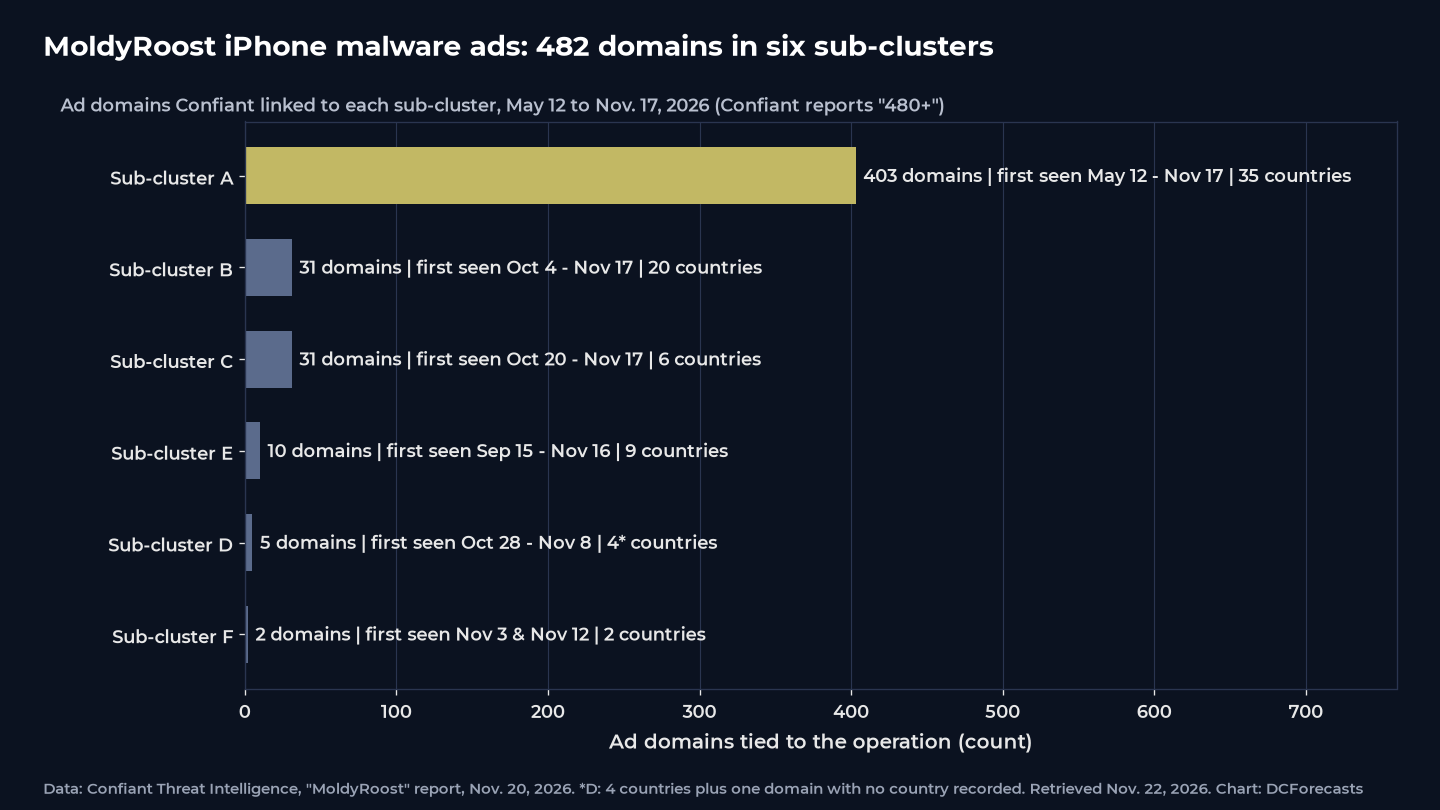
The firm tied more than 480 ad domains to a single operation it calls MoldyRoost between May 12 and Nov. 17, 2026.
The unsettling part is how little a victim has to do. On a vulnerable iPhone, simply loading the ad’s landing page is enough.
For Bitcoin holders, the report is less about Bitcoin itself and more about where the keys to it live.
The bigger question is whether self-custody habits are keeping pace with attackers who now buy ad space to reach wallets.
How the iPhone Malware Campaign Works
Confiant’s report, published Nov. 20, describes a malvertising machine rather than a new hacking tool.
MoldyRoost buys programmatic ads at scale and hides its landing pages behind cloaking. Only an iPhone browser gets the malicious code. Everyone else, including ad reviewers and security scanners, sees a harmless decoy.
Once a target lands, a hidden frame reads the iOS version and fires a matching exploit kit. There is no fake download and no command to paste.
One example Confiant documented: a Cantonese-language ad for a cloned Agoda Hong Kong booking page, with an 18-second “loading” bar that kept visitors busy while the exploit ran.

Another group showed a fake “Verify you are human” check. It looked like a familiar scam, but the attack started the moment the page opened.
Seed Phrase Theft Is the Main Prize
The operation did not write its own weapons. It rents or reuses two known iOS exploit families, Coruna and DarkSword, plus two newer branches called SilkPath and GhostWave.
Coruna packs 23 exploits in five chains and covers iOS 13.0 through 17.2.1. Confiant says its implant hooks wallet apps such as MetaMask, Phantom and Trust Wallet and searches Apple’s notes app for seed phrases and saved images for QR codes.
DarkSword targets iOS 18.4 to 18.7 with six vulnerabilities, three of them zero-days. It sweeps up the keychain, iMessage, WhatsApp and Telegram data, saved Wi-Fi passwords, location history and wallet data in one pass.
That is why seed phrase theft sits at the heart of this story. A seed phrase is the master key to a self-custodied wallet, and anyone who copies it can move the funds.
We believe the lesson is simple: a recovery phrase stored as a note or a photo is effectively stored online.
Where Did the Malvertising Land Hardest?
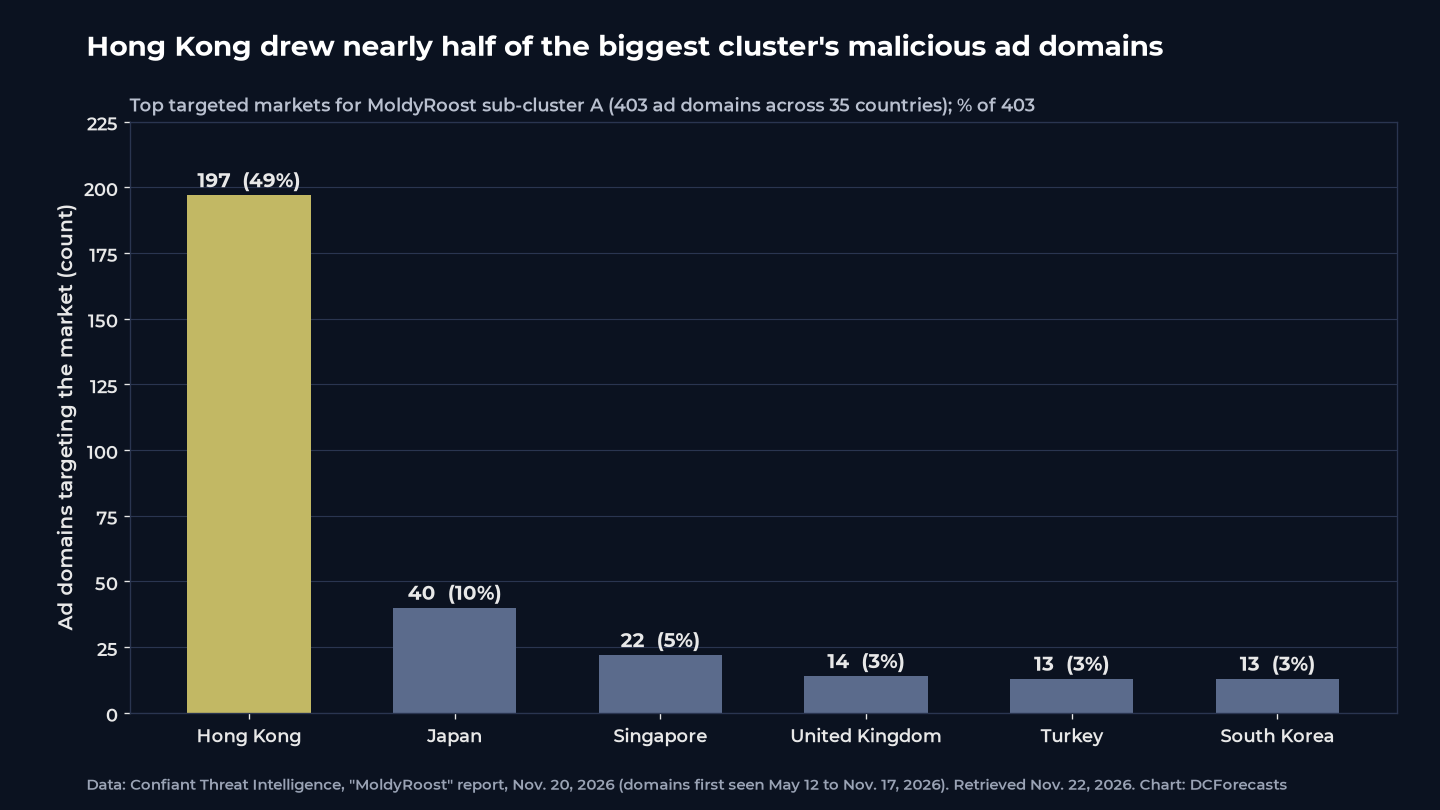
Confiant groups the campaign into six sub-clusters, labeled A to F. Sub-cluster A is the oldest and largest, with 403 ad domains across 35 countries.
Hong Kong accounted for 197 of those domains, nearly half. Japan followed with 40, Singapore with 22, the United Kingdom with 14, and Turkey and South Korea with 13 each.
The smaller groups picked crypto-flavored bait. Sub-cluster E ran ads themed on Tron energy rentals, crypto mining and, earlier, a Bitcoin miner.
The most revealing group was sub-cluster F, nicknamed “Nano.” On Nov. 12, one of its servers left part of its code repository readable.
The recovered commits, made between Oct. 27 and Nov. 4, read like release notes. One gave every sales channel its own subdomain and payload so that “the backend can attribute by Host,” in Confiant’s translation. Others updated wallet targets, including Bitget Wallet, Tonkeeper and OKX Wallet.
In plain terms, stolen wallets were being booked to whichever ad channel brought the victim in. Confiant could not determine whether one crew runs all six groups or rents them to affiliates.
Patched iPhones Have the Upper Hand
There is genuinely good news here. Google Threat Intelligence Group says all six DarkSword vulnerabilities were patched with iOS 26.3, most of them earlier.
Confiant found code that tries to recognize iOS 26, but its researchers were clear: “We have seen no iOS 26 exploit code, and we cannot say whether any of these branches work.”
US authorities have also flagged the underlying bugs. The Cybersecurity and Infrastructure Security Agency added the Coruna flaw CVE-2023-43000 to its Known Exploited Vulnerabilities catalog on March 5, 2026, and three DarkSword bugs, CVE-2025-31277, CVE-2025-43510 and CVE-2025-43520, on March 20.
Google advises updating to the latest iOS and, where that is not possible, turning on Lockdown Mode.
We would also note that MoldyRoost is separate from the Optimizely script attack of Nov. 16, which used the same exploit kits through hijacked websites. As we reported, that Optimizely supply chain attack hit 178 brands.
Crypto Wallet Security Starts With Keeping Keys Off the Phone
Nothing in Confiant’s findings touches the Bitcoin network. The attackers go after devices, not the protocol.
That distinction matters. Bitcoin’s design means whoever holds the keys controls the coins, so crypto wallet security comes down to where those keys sit.
For us, the practical checklist is short:
- Keep the iPhone on the latest iOS release, or enable Lockdown Mode if an update is unavailable.
- Never type a seed phrase into a notes app or save it as a screenshot or photo.
- Hold long-term savings on a hardware wallet that signs transactions offline.
- Treat any ad that opens a booking, game or “anti-fraud” page with suspicion, especially on older phones.
We have covered how weak key handling can expose funds before, including the reused nonce study that exposed 3,278 Bitcoin private keys. The thread running through both stories is the same.
We believe the operation’s sophistication is, in its own way, a compliment to self-custody. Criminals are investing in ad accounts and exploit kits because well-secured Bitcoin cannot simply be taken from the chain.
Holders who keep their phones updated and their seed phrases offline remove themselves from MoldyRoost’s target list. The coming weeks will show whether iOS 26 stays as resistant as Confiant’s findings suggest.
DC Forecasts is a leader in many crypto news categories, striving for the highest journalistic standards and abiding by a strict set of editorial policies. If you are interested to offer your expertise or contribute to our news website, feel free to contact us at [email protected]












Discussion about this post